
Settlement Layer
Real-World Tokenization: The Infrastructure of Tomorrow's Capital Markets
By DWN-team · Oct 12, 2026 Views: 28
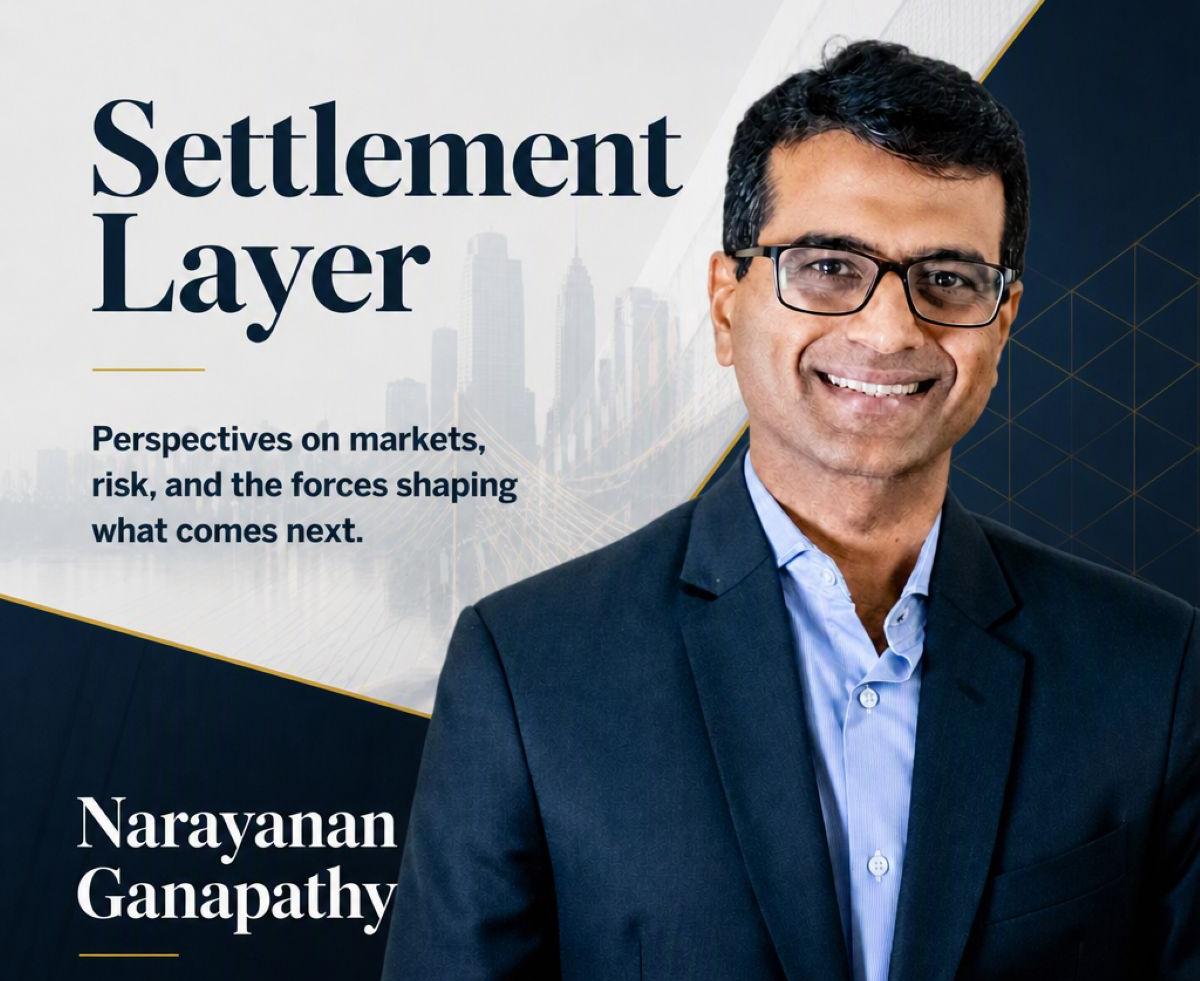
By Narayanan Ganapathy, Independent Board Member, Royal Investments
Something Familiar
Think about email. Email did not change what a message said. It changed how that message moved — faster, cheaper, directly, with a permanent record. The content remained the same. The infrastructure underneath it transformed entirely.
Tokenization does exactly the same thing for asset ownership. Real-World Asset (RWA) tokenization does not change what an asset is. It changes how ownership of that asset is recorded, transferred, and verified — on a blockchain, in real time, with an immutable audit trail. The asset stays the same. The plumbing underneath it becomes dramatically better.
For finance and accounting professionals, that distinction matters enormously. This is not a technology story. It is an infrastructure story — and infrastructure is squarely our domain.
Why Does Blockchain Make This Better?
Consider what happens today when a single bond changes hands. The same transaction triggers separate ledger updates at the broker, the exchange, the custodian, the depository, and the registrar. Five records. Five reconciliations. Multiple points of failure.
Blockchain replaces this with one shared ledger — updated once, visible to all authorized parties simultaneously. The professional implications for accountants and auditors are significant:
- Reconciliation risk collapses — one version of the truth, not five.
- Settlement becomes near-instantaneous — reducing counterparty exposure.
- The audit trail is immutable by design — every ownership change, permanently and cryptographically recorded.
The Institutions Are Already In — At Scale
This is no longer a fringe conversation. The world's largest financial institutions have committed real capital to tokenized products.
- BlackRock's BUIDL Fund — the world's largest tokenized money market fund — surpassed USD 2.5 billion in AUM within months of its March 2024 launch3
- JPMorgan's Kinexys platform has processed over USD 3 trillion in cumulative volume and exceeds of USD 5 billion in daily transactions4
- Goldman Sachs, on 27 April 2026, issued the first blockchain-native tokens for a Luxembourg domiciled real estate fund on its GS DAP™ platform — partnering with Apex Group and Archax5
These are live, regulated, institutionally managed products. Not pilots. Not experiments.
What Are the Regulators Doing? Quite A Lot, Actually!
The GCC has moved with real purpose on this — and Bahrain is genuinely ahead of the curve.
In Bahrain, the CBB's Crypto-Asset Module (CRA) — live since 2019 and strengthened in April 2023 — establishes a four-category licensing framework.
The 2023 amendments also introduced explicit regulation of Digital Token Offerings — requiring that tokens with security characteristics be assessed against their underlying economic substance. That maps directly onto tokenized RWA structures6.
In Dubai, VARA's updated Rulebook v2.0 (May 2025) introduced the Asset-Referenced Virtual Asset (ARVA) classification — the first dedicated regulatory category for asset-backed tokens. Issuers must maintain fully segregated reserves and undergo independent audits periodically7.
Two frameworks. Two jurisdictions. One coherent, enforceable foundation for the GCC.
So What Does This Mean for Us as Chartered Accountants?
Here is where it gets really interesting for our profession.
Tokenized assets do not create new accounting categories. But they do stress-test the existing ones — hard. Three areas demand immediate attention:
(i) IFRS 9 — SPPI Test
(ii) IAS 40 — Investment Property
(iii) IFRS 13 — Fair Value (Level 3)
The key message? Establish your accounting policies before engagement — not during it.
The Bottom Line
Four things to take away:
- Tokenization changes how ownership moves — not what the asset is
- Institutions are in, regulators are moving, and the market is growing fast.
- Bahrain and Dubai have frameworks ready to support this activity today.
- As Chartered Accountants, we are uniquely placed to lead this conversation
Author Bio: Narayanan Ganapathy is a financial services and investment professional with broad experience across investment management, corporate finance, and digital investment platforms. He is Co-founder and Board Member of Bambucorn, and has held senior roles at Deutsche Bank, GFH Financial Group, KPMG Corporate Finance, and International Investment Bank. As Independent Board Member of Royal Investments, he contributes an independent perspective to the Board’s deliberations and brings particular expertise to the firm’s financial and technology related investment activities and governance framework.