
Family Office Focus
Beyond the Canvas: What a Week in London Taught Me About Art, Family Wealth, and Tokenization
By DWN-team · Oct 19, 2026 Views: 932
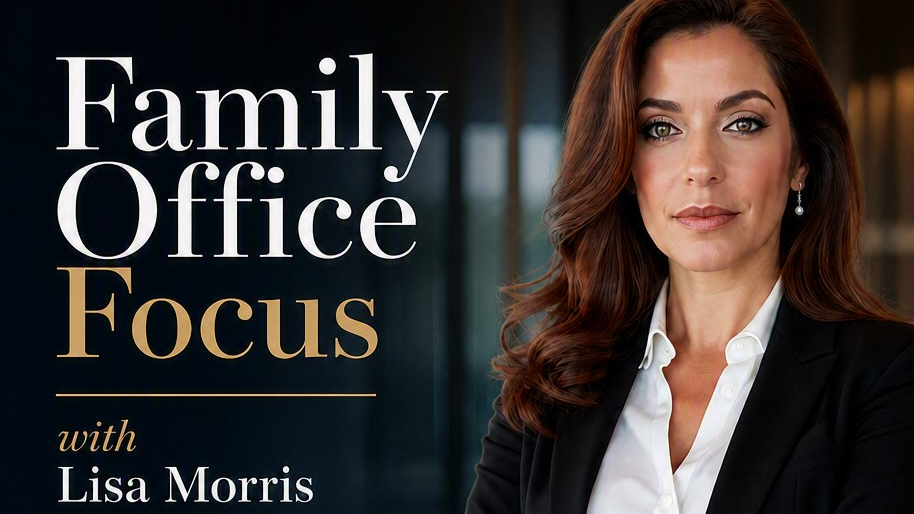
By Lisa Morris
I am writing this article on the plane back to New York after a glorious week in London. As a member of the Selection Committee of the Queen Elizabeth II Commonwealth Trust, I had the honor of being hosted by King Charles for a special reception at St James's Palace. It was a thrill for this American girl to be inside the palace alongside exceptional young leaders from across the Commonwealth.
As I stood with them in this magnificent palace, with stunning artwork on every wall and surface, I started thinking about art and the many roles it plays in our culture. The palace event happened to coincide with Frieze Art Week, so art turned out to be the theme of my whole trip. I kicked off the week attending a fantastic soirée at an art gallery courtesy of Laura Bounin and I was graciously provided with a VIP ticket for the Frieze events by Simone Esposito, founder of LXRYSolutions.
During our time together, Simone and I talked about how, for decades, passion assets—like fine art, rare watches, historic gemstones, and fine wines—sat in a unique, almost isolated corner of private wealth. They hung on gallery walls or sat safely in climate-controlled vaults, but families rarely integrated them into their core wealth strategy with the same institutional rigor applied to real estate, private equity, or liquid capital markets.
When you ask a family what it really wants from its wealth beyond simple preservation, the answers rarely fit neatly into a standard asset allocation table. Families want access to the creators and curators behind extraordinary things. They want an education for the next generation that no traditional school can offer. And above all, they want confidence that what they own is properly documented, valued, structured, and ready to pass on smoothly to the next generation.
This evolution is fundamentally changing how family offices treat passion assets. Fine art is no longer viewed merely as a static aesthetic luxury; it is emerging as a dynamic, borderless asset class requiring modern financial and technological infrastructure.
Moving Beyond the Allocation Table
In traditional wealth management, passion assets have often posed a structural dilemma: high intrinsic value paired with total illiquidity, opaque provenance, and complex estate logistics. When a collection spans multiple generations or international jurisdictions, fragmented information often stalls key decisions about preservation, lending, and succession.
Bridging this exact gap has been a two-decade focus for Simone. Operating between London, Dubai, and New York, his strategic advisory practice works across three practice areas designed to align passion assets with true institutional discipline:
- Strategic Advisory & Brand Partnerships: Building lasting institutional partnerships between ultra-high-net-worth investors, family offices, and legacy luxury houses.
- Luxury Real-World Asset (RWA) Tokenization: Translating physical collectibles and fine art into digital ownership structures that strengthen provenance, transparency, and long-term stewardship.
- Luxury Experiences & Institutional Events: Curating private, closed-door educational platforms for family principals and the next generation.
"The families I work with can buy almost anything," Simone mentioned to me during one of our conversations. "What they value most is what cannot be bought: time with the person who cut a historic stone, or a conversation that changes how the next generation thinks about what it will inherit."
The Infrastructure Layer: Bridging Physical Masterpieces and Digital Ownership
While private access solves the educational and experiential side of the equation, the structural management of fine art requires real technological rigor. Tokenizing real-world luxury assets is often mischaracterized as a speculative digital trend, but in reality, for family offices, it is an essential infrastructure and governance upgrade.
To tokenize a physical asset meaningfully, technology must establish an undeniable, tamper-proof link between the physical masterpiece hanging on the wall and its digital representation. This is where specialized platforms like Arius Technology come into play.
Arius provides the precision engineering necessary to turn physical art into a digitally verifiable asset class. Using patented, non-invasive laser scanning systems, they work on masterpieces like the Mona Lisa as well as art owned by museums, galleries, and private families. Arius captures artworks down to a 10-micron resolution. This process records over 250 million data points, creating a high-fidelity 3D "digital twin" and a surface "fingerprint" equivalent to a microscopic DNA record of the canvas.
This forensic-grade record, known as the Arius Art Digital Master File (ADMF™), provides the exact physical anchor needed for true digital ownership:
- Unassailable Provenance & Authenticity: By linking a blockchain token directly to a microscopic physical fingerprint, the asset is protected against forgery, fraudulent substitution, or disputed origin.
- Condition & Insurance Monitoring: The digital record acts as an objective "before" state, streamlining insurance underwriting, claims, and restoration work with mathematical precision.
- Financial Flexibility & Lending: Institutional lenders require high-integrity data. With forensic records anchored on-chain, family offices can leverage fine art collections as collateral for liquidity without physically moving the artwork.
- Preservation & Access: Through high-resolution visualization and textured reproductions, families can keep original masterpieces safely archived in a vault while displaying museum-grade replicas in their secondary residences.
Tokenization Is Ultimately a Governance Story
When you apply digital ownership to family office portfolios, it solves three core operational mandates that families care deeply about:
- Provenance: Digital product passports provide an unalterable history of ownership, condition, and valuation, simplifying insurance, cross-border transport, and potential resale.
- Governance: Multi-entity ownership structures and complex estates benefit immensely from unified, shared ledger data. Deciding how to manage, display, or monetize a collection becomes a straightforward operational exercise based on trusted, single-source records.
- Continuity & Next-Gen Engagement: Succession is so often where passion asset value deteriorates due to a lack of documentation or interest from heirs. Tokenization completely changes this dynamic.
Tokenization is too often presented as purely a technology story. For families, it is also a governance story: who owns what, how it is documented, and how it passes to the next generation. Get that right, and the technology does what nothing else can: it makes ownership provable."
What This Means for Wealth Advisors
As wealth managers and family office executives, we are regularly asked to navigate passion assets, experiential investments, and next-generation engagement strategies. These areas fall outside traditional financial modeling, yet they directly impact client retention, estate planning, and overall family cohesion.
By partnering with luxury advisors like LXRYSolutions and leveraging cutting-edge technology platforms like Arius Technology, advisors can offer structured, institutional-grade solutions for physical assets without taking their eye off their core financial mandates.
As I look out the plane window on my way back to New York, reflecting on an unforgettable week among monarchs, family offices, curators, and innovators, the underlying message feels crystal clear: the most valuable assets in our lives are not merely bought and held—they are curated, protected, and seamlessly passed down for generations to come.
Disclosure: This article is for informational purposes only and does not constitute tax or legal advice. Anyone considering investments should work with an experienced tax professional before relying on any of the provisions described above.
Author Bio: Lisa Morris is Managing Director of AKS Family Partners LP, a single family office based in NYC. She has two decades of experience spanning theater, travel, entrepreneurship, philanthropy, and investments.
She founded the travel company Road Concierge, which was later acquired by Internova Travel Group. A former Broadway actress, she is also an Entrepreneur-in-Residence with NYSERDA, an EarthShot Prize nominator, and a member of several investment and impact communities, including NEXUS Impact Society, 3i, IPI/Campden, Top Tier Impact, Aura Club, Adoreum, and Gaingels.
She has held senior consulting roles with nonprofits including Epic Foundation, Mary Tyler Moore Foundation, and AKS Family Foundation, and as Director of Philanthropic Services for FORCE Family Office. She serves on several advisory boards, consults for companies from startups to public firms, and is a frequent public speaker and pitch coach. Her upcoming book, "Can You Rollerskate?", launches November 2nd, 2026 and is available for pre-order on Amazon, Waterstones, and Barnes & Noble.