
Family Office Focus
How the SpaceX and Anthropic IPOs Are Changing the Game for Family Offices
By DWN-team · Nov 23, 2026 Views: 3,686
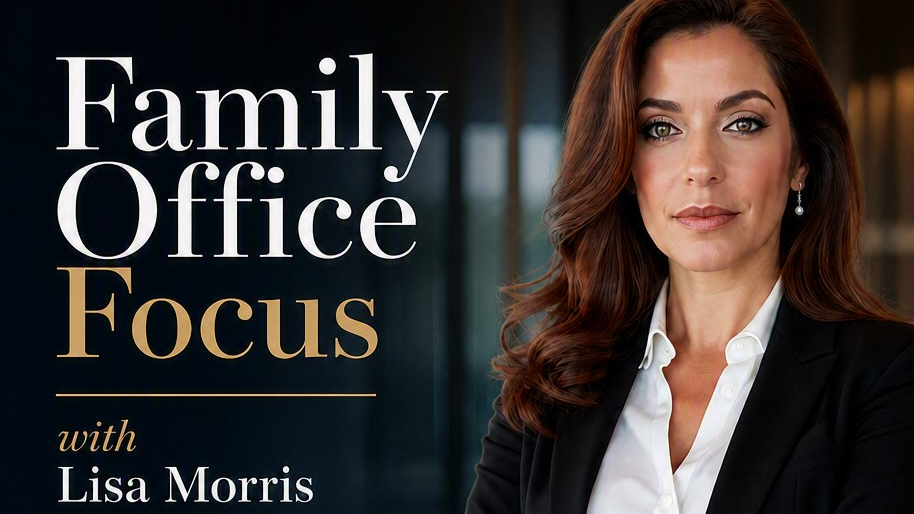
By Lisa Morris
For the last several months, I watched (and admittedly jumped into the pursuit game) as so many family offices desperately tried to find legitimate ways to jump into Anthropic with huge sums of money before the anticipated IPO. It was like chasing pixie dust- trying to find a legitimate L1 allocation amongst a sea of L2, fake SPV allocations, GPs who were on the cap table offering an "in" for 26% upfront fees and more shenanigans. Many families gave up, others went all in. It will be interesting to see how it shakes out for those who managed to get on the cap table before the IPO, after the lock-up period, factoring in all the fees and games played along the way.
In recent months, two massive public listings completely rewrote Wall Street's rules. First came SpaceX in June, raising upward of $75 billion at a $1.77 trillion valuation and briefly making Elon Musk the world’s first trillionaire. Then, just days ago on November 18, Anthropic shattered that record, pricing its IPO at $83 a share to pull in more than $81 billion at a $1.5 trillion valuation. This happened even after the Jensen/Nvidia scandals provoked rumours that it wouldn't happen at all.
While investment banks collected massive underwriting fees and everyday investors scrambled to buy shares on rumorsday one, the people who actually made the biggest fortunes from these listings weren't watching the opening bell. They were the family offices who had been quietly buying into both companies for years. Now, as the dust settles on these two historic debuts, those same family offices are navigating massive windfalls, an influx of new competition, and a whole new set of market headaches.
The Post-IPO Hangover
For the established family offices that backed SpaceX and Anthropic early on, turning paper gains into actual cash brings a tricky new set of problems.
The biggest headache right now is surviving post-IPO volatility while waiting out lockup periods—the mandatory windows where early investors aren't allowed to sell their shares. SpaceX’s staggered 180-day lockups are starting to expire right as the stock has slipped below its $135 offer price, weighed down by lender questions over how the company is financing its orbital AI chip ambitions. Over at Anthropic, shares jumped 17% on day one before pulling back under $90, forcing family office investment chiefs to figure out how to hedge their bets and manage massive tax bills before their own lockup windows open.
Family offices are already hunting for the next private giants before their valuations get out of reach. And because those early direct bets paid off so handsomely, fewer family offices are willing to pay steep fees to middlemen. Instead, they are hiring their own technical analysts to evaluate AI economics and rocket science in-house, competing head-to-head with major venture firms for a spot at the table.
Why Family Offices Got There First
Companies used to go public so they could raise the money needed to grow, giving everyday stock market investors a chance to ride the wave up. SpaceX and Anthropic flipped that script entirely. Both stayed private until they were worth more than a trillion dollars, relying on massive pools of private money to build rocket fleets, satellite networks, and colossal AI data centers.
Family offices were the ideal fit for this kind of investing. Traditional venture capital funds usually have to return money to their investors within ten years, and mutual funds need stocks they can buy and sell at a moment's notice. Family offices don't have those pressures. They invest with "patient capital," thinking in terms of decades rather than quarters.
When SpaceX’s valuation climbed from $300 billion in 2023 to $800 billion in 2025, family offices were steady buyers on secondary markets, happily buying shares from early employees who wanted to cash out. They ran the exact same playbook with Anthropic, jumping into its massive funding rounds through 2025 and 2026 via venture partnerships and custom investment vehicles. Anyone who waited until the IPO to buy in already missed the biggest payday.
These massive IPOs didn't just make existing family offices richer; they are likely creating hundreds of brand-new ones.
Anthropic’s debut alone is expected to mint hundreds of new centimillionaires among its engineers, researchers, and early backers, on top of a staggering $171 billion combined fortune for its co-founders. Add in the longtime SpaceX employees whose stock options just turned into liquid cash, and there are tons of potential candidates to form their own family offices.
While all family offices have very different investment strategies, the traditional, multi-generational families typically lean towards a wealth preservation strategy. Their focus is preserving wealth, minimizing taxes, and figuring out the best way to pass the money down to the next generation. This new wave of founders and employees with their new fortunes may approach things very differently. They understand tech. They are younger and less risk averse more likely to lean into venture bets on new technologies, and rely on their own custom AI systems rather than traditional Advisors.
They are eager to take the cash they just made and plow it straight back into early-stage AI, robotics, aerospace, and deep-tech startups—betting on the next generation of founders who look just like them. I expect a plethora of new technologies aimed at this new generation of 1st gen family offices to appear, offering everything from diligence to investment tracking to setting up governance and more.
The SpaceX and Anthropic IPOs are the clearest proof yet that the private markets are where the real wealth is built today. By the time a blockbuster tech company hits the public stock exchange, the most explosive growth is usually in the rearview mirror.
For family offices, that is both a victory lap and a wake-up call. It proves that having flexible, long-term money gives them a massive edge. But with hundreds of newly minted SpaceX and Anthropic millionaires now setting up their own investment shops—armed with fresh cash and deep Silicon Valley connections—the race to find and fund the next trillion-dollar private company just got a whole lot more crowded.
Disclosure: This article is for informational purposes only and does not constitute tax or legal advice. Anyone considering investments should work with an experienced tax professional before relying on any of the provisions described above.
Author Bio: Lisa Morris is Managing Director of AKS Family Partners LP, a single family office based in NYC. She has two decades of experience spanning theater, travel, entrepreneurship, philanthropy, and investments.
She founded the travel company Road Concierge, which was later acquired by Internova Travel Group. A former Broadway actress, she is also an Entrepreneur-in-Residence with NYSERDA, an EarthShot Prize nominator, and a member of several investment and impact communities, including NEXUS Impact Society, 3i, IPI/Campden, Top Tier Impact, Aura Club, Adoreum, and Gaingels.
She has held senior consulting roles with nonprofits including Epic Foundation, Mary Tyler Moore Foundation, and AKS Family Foundation, and as Director of Philanthropic Services for FORCE Family Office. She serves on several advisory boards, consults for companies from startups to public firms, and is a frequent public speaker and pitch coach. Lisa is a "USA Today Best Selling Author" of the book, Can You Rollerskate, available on Amazon, Waterstones, and Barnes & Noble.