
Family Office Focus
Investing Before the Harm - Proactive vs. Reactive
By DWN-team · Nov 16, 2026 Views: 3,335
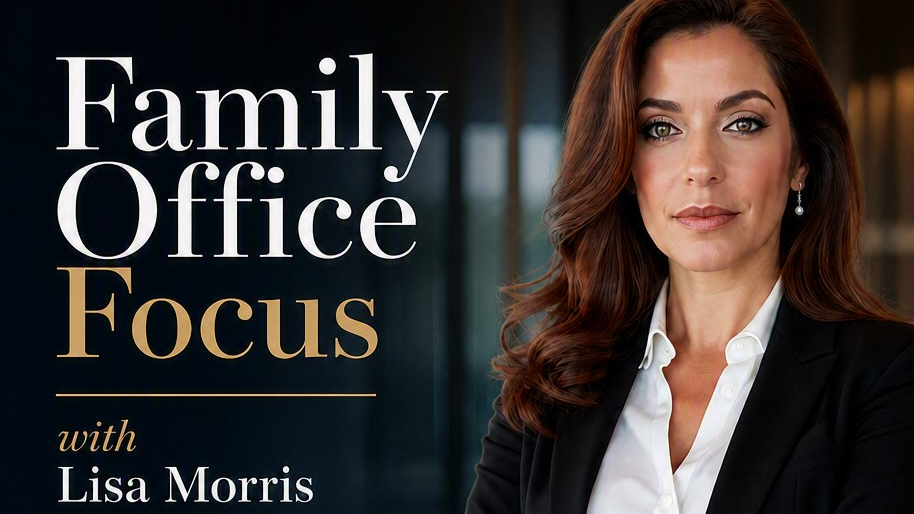
By Lisa Morris
Anyone who has spent time around family offices knows the smartest capital rarely waits for a crisis before taking action. Whether we are evaluating a company, protecting a family legacy, or navigating shifting markets, the real edge comes from looking upstream. We look for early warning signs, build resilient infrastructure, and step in before a preventable loss becomes a catastrophe.
Yet when it comes to how many philanthropic families approach one of the darkest realities in our world today, grooming, sexual exploitation, and human trafficking, our philanthropy is still overwhelmingly reactive. For decades, nearly all charitable funding in this space has gone toward the aftermath- funding rescue missions, legal prosecution, emergency shelters, and survivor recovery. All of these are very important and valuable, and the people on the front lines deserve every ounce of our support.
I have had the pleasure of meeting Paul Hutchinson and have long admired his work with the Child Liberation Foundation, which many are familiar with due to the film "Sound of Freedom." Still, there is a hard truth we rarely stop to confront: by the time a rescue happens, a life may have already been shattered.
It leaves us with an urgent question for our community:
What if family offices invested just as aggressively in preventing exploitation as we do in cleaning up after it?
That exact question is driving the work of Alana Stott, MBE, CAP®, an entrepreneur, intelligence specialist, and global advocate who is changing the conversation around how we protect vulnerable people. In 2023, King Charles III appointed Alana a Member of the Order of the British Empire for her services to vulnerable women, children, and mental health. She is a Certified Human Trafficking Investigator, a Chartered Advisor in Philanthropy, and a doctoral candidate in Clinical Sexology.
Because she sits at the intersection of intelligence, behavioral research, and strategic philanthropy, Alana sees exploitation differently than most. She doesn't view it simply as a sudden, isolated crime. She sees it as a predictable process that can be interrupted.
During a recent TEDx talk in New York, she challenged the room with a simple, piercing question: What happens before someone becomes a victim?
Human trafficking almost never begins with a stranger pulling someone off the street. It begins with psychological grooming. It is a slow, calculated process where a predator identifies an emotional vulnerability, builds misplaced trust, and quietly isolates a young person long before any physical harm takes place. Whether that happens in a school hallway, a local community, or through a smartphone screen at two in the morning, there is almost always an early window where intervention could have changed the ending.
As Alana explains it, “We will never rescue our way out of exploitation. Every victim was first recruited into trust, and somewhere before the harm occurred, there was an opportunity to intervene. Our mission is to find those opportunities and build the systems that make prevention possible.”
Building Prevention Infrastructure
To turn that insight into real-world protection, Alana founded the Blue Rose Alliance,a U.S. nonprofit dedicated to stopping grooming, sexual exploitation, and trafficking before harm ever occurs. Instead of treating prevention as a feel-good awareness campaign, the organization treats it as essential social infrastructure. They bring together intelligence, research, technology, and public policy to dismantle the conditions that allow predators to operate in the first place.
What makes the Blue Rose Alliance especially compelling from an investment standpoint is its focus on true global scale. Alongside the International Organization for Migration, the team is building an international prevention initiative with a bold goal: reaching 300 million young people by 2030. By weaving evidence-based prevention education and smart technological safeguards directly into the platforms, schools, and everyday systems young people rely on, they are working to protect an entire generation before predators ever get close.
For family offices used to thinking in terms of root causes, governance, and measurable outcomes, this is a refreshing shift. Instead of writing checks year after year to patch up an endless cycle of trauma, upstream prevention changes the math entirely by shrinking the number of victims entering the pipeline.
Why Family Offices Matter Right Now
Private wealth is already proving that it can move the needle against modern slavery when capital is deployed with discipline. Over the past decade, pioneering family offices and private foundations from Mitzi Perdue to Humanity United to the Carlson Family Foundation and next-generation networks like Nexus, (where this author has been a proud member for many years) have mobilized hundreds of millions of dollars to confront forced labor, clean up corporate supply chains, and fund frontline rescues. That momentum shows what happens when private families commit to solving complex global problems. Upstream prevention is the natural next frontier.
Governments and traditional institutions are often too slow, too bureaucratic, or too compartmentalized to build something entirely new from the ground up. Family offices do not have that problem. We have the agility, the cross-sector relationships, and the long-term horizon needed to pioneer a whole new category of philanthropic giving: prevention infrastructure.
When private capital pairs deep values with smart execution, it can spark systemic change that public funding simply cannot match.
In a digital world where artificial intelligence and social media have made it easier than ever for bad actors to reach children in their own bedrooms, our philanthropy cannot stay stuck in the past. Building modern protection requires early research, cross-border partnerships, and technological innovation. That is precisely the kind of catalytic, early-stage backing where family offices shine.
How We Can Step In
I was introduced to the brilliant work of the Blue Rose Alliance at an intimate Founding Circle dinner in New York, bringing together family office principals, philanthropists, and strategic leaders to help shape and fund the blueprint for this global rollout. Right now, the Blue Rose Alliance is inviting founding philanthropic partners, family offices, and strategic collaborators to help lay the groundwork for global implementation. If you are a principal, a next-generation leader, or an advisor looking to put capital and influence behind measurable human impact, there are several meaningful ways to step in.
You can join the Founding Circle as an early philanthropic partner to help shape and scale the organization's global strategy. You can direct funding toward the research, educational programs, and technology needed to reach 300 million young people by 2030. Just as importantly, you can open doors by introducing Alana and her team to fellow family offices, foundations, technology companies, and institutional partners who care about lasting systemic change.
A Different Kind of Legacy
At the end of the day, generational stewardship is about more than preserving wealth across decades. It is about using our capital and our influence to protect human potential. Rescue and recovery will always be vital acts of compassion, but prevention is an act of foresight.
By moving our philanthropic capital upstream, family offices have a rare chance to help rewrite the story. We can move the world away from a system that only responds after lives are broken, and toward one that makes sure far fewer lives are ever broken in the first place.
To learn more about the Blue Rose Alliance, its partnership with the International Organization for Migration, or how to get involved with the Founding Circle, visit bluerosealliance.org or reach out directly to Alana Stott and her team.
Disclosure: This article is for informational purposes only and does not constitute tax or legal advice. Anyone considering investments should work with an experienced tax professional before relying on any of the provisions described above.
Author Bio: Lisa Morris is Managing Director of AKS Family Partners LP, a single family office based in NYC. She has two decades of experience spanning theater, travel, entrepreneurship, philanthropy, and investments.
She founded the travel company Road Concierge, which was later acquired by Internova Travel Group. A former Broadway actress, she is also an Entrepreneur-in-Residence with NYSERDA, an EarthShot Prize nominator, and a member of several investment and impact communities, including NEXUS Impact Society, 3i, IPI/Campden, Top Tier Impact, Aura Club, Adoreum, and Gaingels.
She has held senior consulting roles with nonprofits including Epic Foundation, Mary Tyler Moore Foundation, and AKS Family Foundation, and as Director of Philanthropic Services for FORCE Family Office. She serves on several advisory boards, consults for companies from startups to public firms, and is a frequent public speaker and pitch coach. Her upcoming book, "Can You Rollerskate?", launches November 2nd, 2026 and is available for pre-order on Amazon, Waterstones, and Barnes & Noble.