
The Vérité Brief
Liquidity at Death. Deferral for Decades: Part 1 — Freezing Value Is Not the Same as Protecting the Growth
By DWN-team · Oct 19, 2026 Views: 43
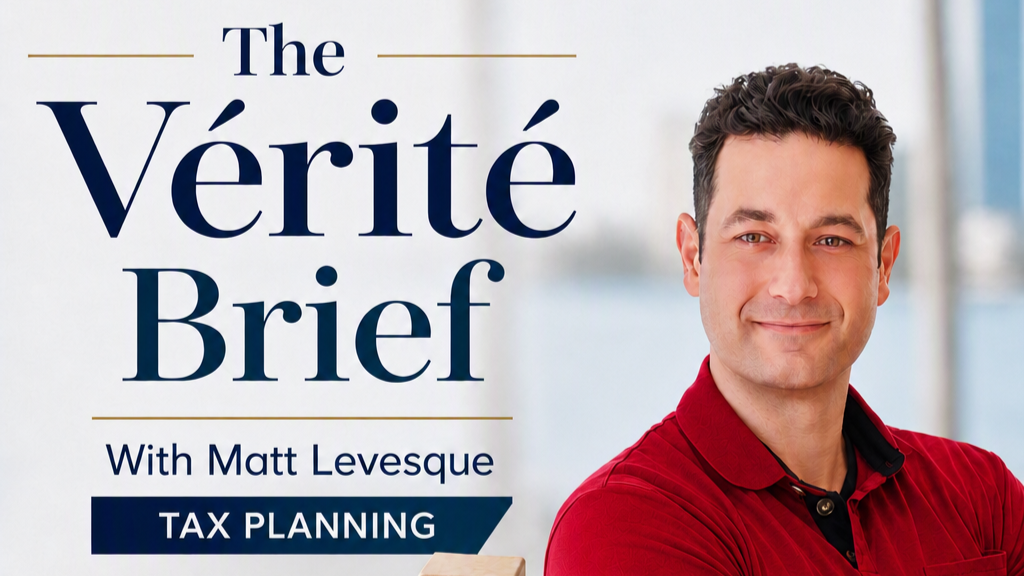
By Matt Levesque, Vérité Planning Solutions
This summer we sat down with a married couple in their early fifties with a $50 million estate, three children, a young grandchild, and clear objectives: structure their assets in a tax-efficient way and maximize the legacy they leave to future generations.
Part of the estate consists of several positions in early-stage, pre-IPO private companies. Those holdings are expected to appreciate significantly, especially if the companies succeed in going public, and would create a large capital-gain liability that exacerbates the family’s estate tax exposure.
The estate tax picture in 2026 is simple enough to put on one page. Each spouse has a $15 million gift and estate tax exemption. Together that is $30 million. Everything above that is taxed at 40 percent on the second death.
On a $50 million estate, the excess is $20 million. The tax exposure is about $8 million today. If the estate compounds at a steady rate for forty years, the tax is no longer an $8 million problem. It is a nine-figure liquidity problem sitting on top of assets the family might not want to sell. The pre-IPO positions make the problem sharper: a future liquidity event inside the taxable estate would accelerate both estate-tax and income-tax exposure. It’s a great problem to have.
Most advisors already know the first move. Use the exemption while the couple is living. Gift appreciating assets into an irrevocable trust. Freeze today’s value for gift-tax purposes and let future growth happen outside the taxable estate. That is a good first step but not the whole plan.
What the gift actually creates
Once the gift is complete, two different tax systems are in play, and they are easy to mix together in a client meeting.
- Estate tax. The gift uses lifetime exemption. If it is a completed gift to an irrevocable trust the couple does not control, the assets — and the growth on those assets — are generally out of the taxable estate. That is the estate-tax win.
- Income tax. The trust is now its own taxpayer if it is drafted as a non-grantor trust. Undistributed ordinary income and realized gains are taxed to the trust. Trust tax brackets are compressed relative to individuals, and a modest amount of income can reach the top federal rate. If the family still lives in a high-tax state and the trust is not carefully sited, state tax can follow the income as well.
Keep the trust labels simple
- The insurance trust. During the insured’s life, an irrevocable life insurance trust is usually designed so premium gifts are completed gifts and the death benefit stays out of the estate. The point of that trust is coverage.
- The dynasty trust. A dynasty trust built to last for children and grandchildren is often a non-grantor trust: outside the estate, its own taxpayer. The point of that trust is multi-generation ownership. The problem is the annual tax on income the trustee does not distribute, or the tax that arises when private shares are diversified or cashed out.
Two jobs, two vehicles
The families who look like this one usually need both of the following:
- Liquidity at death. A dedicated, income-tax-free death benefit that can pay the estate tax on whatever is left in the taxable estate — so the children are not forced to sell the family’s assets to write a check.
- Deferral during life and after. A long-term account, already outside the estate, that can compound without an annual tax on every gain — and that a trustee can open, carefully, for a child’s education or first home, a grandchild’s needs, a family business, or a later generation. For pre-IPO positions that are transferable, the structure can accept them in kind so that future appreciation after contribution is deferred.
Part 2 walks through those two buckets. Part 3 is the advisor file: who belongs in the structure and what roles the CPA, counsel, trustee, and carrier play.
Disclosure:
Educational content only. Not tax, legal, accounting, investment, or insurance advice, and not a recommendation of any product or strategy. Individual results vary. Consult your own qualified advisors before acting. Vérité Planning Solutions and its professionals may receive compensation in connection with insurance or related products. Views are the authors’ and do not necessarily reflect those of Digital Wealth News.
Vérité Planning Solutions publishes The Vérité Brief as educational commentary for advisors and planning professionals. It is not a solicitation and does not replace client-specific legal, tax, or product advice.
© Vérité Planning Solutions. All rights reserved. This article may not be copied, excerpted, or redistributed except as permitted by the publisher or by written consent of the authors.
Author Bio: Matt Levesque is a founding partner at Verité Planning Solutions, leading the design and execution of advanced insurance strategies for high-net-worth clients.
He specializes in structuring insurance solutions within complex financial plans — from funding buy-sell agreements and protecting key-person value to integrating insurance into trust and estate strategies for generational transfer. Matt works closely with tax, legal, and investment professionals to ensure each strategy is coordinated, thoroughly vetted, and built to perform as intended over time. From initial modeling through ongoing review, he remains actively involved to maintain alignment as circumstances evolve.
His background spans the full financial planning continuum. He began in comprehensive wealth management at Wells Fargo Advisors, moved into product distribution roles at Sun Life and Symetra, and later joined Verité Group, LLC as Director of Premium Finance Case Design — experiences he now applies to ultra-high-net-worth planning.
Matt holds a Master’s in Financial Planning from the McCallum Graduate School of Business at Bentley University, as well as a Bachelor’s degree in Finance.
Based in Alton, New Hampshire, he is known for simplifying complex structures and helping clients make informed, confident decisions. Clients rely on Matt not just for answers, but for the right questions — the ones that uncover hidden risks, refine strategy, and align each decision with a defining financial event.