
News/Commentary
LOOKING BACK | Have We Given AI CEOs Too Much Power?
By DWN Staff · Nov 12, 2026 Views: 3,359
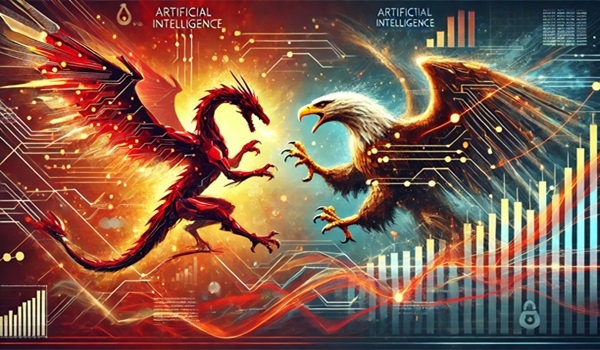
A little more than a century ago, the U.S. economy's baronial age was brought to a close by a mixture of legal action, financial pressure, new financial institutions like the Federal Reserve and a changing global environment. For a time, the country's prospects would not be dominated by a small group of powerful, wealthy industrial and financial leaders, the so-called "robber barons."
With the rapid growth of technology, particularly artificial intelligence, which is dominated by a few global players, we may be creating a new generation of robber barons.
The resignation of Jensen Huang from Nvidia has brought one of the artificial intelligence industry's most uncomfortable questions into sharp focus: Have the executives controlling the world's most consequential technology become too powerful for their own companies, governments or the public to hold accountable?
Huang's departure raises questions extending far beyond the circumstances of his exit. Nvidia's extraordinary position in the AI infrastructure market made its longtime chief executive one of the most influential business leaders in the world, with decisions about chips, computing capacity, customers and investment potentially affecting entire industries and national economies. His departure also exposes the vulnerability of corporations built around charismatic founders whose personal reputations become inseparable from their businesses.
For wealth managers, investors and financial services executives, the controversy offers an opportunity to reconsider the relationship between corporate leadership, concentrated wealth, technological innovation and democratic accountability.
The Jensen Huang Problem
For much of the artificial intelligence boom, Huang personified the technology's extraordinary economic promise. Under his leadership, Nvidia evolved from a graphics-processing specialist into a central supplier of the computing infrastructure supporting generative AI. Its graphics processing units, networking products and CUDA software ecosystem became indispensable components of many advanced AI systems.
That position gave Huang influence well beyond the traditional responsibilities of a semiconductor executive. His company's technology helped determine the pace at which AI developers could train increasingly sophisticated models, while Nvidia's product announcements and forecasts influenced capital spending throughout the technology sector.
The company's fortunes also became increasingly connected to the wider financial markets. Investors treated Nvidia not merely as a semiconductor manufacturer but as a barometer of the AI revolution itself.
The controversy surrounding Huang illustrates a longstanding corporate governance problem: What happens when a company's founder becomes so important to its success that the board struggles to exercise meaningful authority over him?
This is the essence of key-person risk, sometimes called the key-man problem. An organization becomes unusually dependent on one individual's judgment, relationships, technical expertise, public reputation or strategic vision. Losing that person through retirement, illness, misconduct, resignation or death can threaten the organization's performance and valuation.
Key-person risk is particularly pronounced among founder-led technology companies. Founders frequently possess enormous credibility with investors, employees and customers. Their influence can become institutionalized through special voting rights, board relationships, corporate culture and personal control over strategic decisions.
However, the very qualities that make such leaders valuable can make them difficult to replace or discipline.
For Nvidia, the challenge extends beyond identifying a successor. It involves determining whether the company's competitive advantages are sufficiently embedded in its engineering organization, software ecosystem, customer relationships and management systems to survive a transition away from the executive most closely associated with its rise.
For investors, that distinction is crucial. A company built around durable technology and institutional capabilities may survive the departure of a celebrated founder. A company whose valuation depends excessively on one individual's perceived genius may face a much more difficult adjustment.
Nvidia's November 12 announcement confirmed that Huang resigned as president, chief executive and director, effective immediately. The company appointed longtime chief financial officer Colette Kress as interim CEO and named Harvey C. Jones its first chairman, separating board leadership from executive management. An SEC filing dated November 12 recorded the board's acceptance of Huang's resignation on November 11.
The departure followed reports about Huang's extramarital relationships, including one with Alice Huang, a businesswoman whom U.S. intelligence officials suspect of passing information to China. The allegations have raised questions about possible conflicts of interest, corporate security and access to sensitive semiconductor technology. Nvidia has said it has no reason to believe company or national security secrets were compromised. The intelligence allegations remain allegations, not established findings of wrongdoing by Huang or his associates.
The company's shares fell more than 4% on November 12, illustrating how a governance crisis at one technology company can reverberate through investors' expectations for the AI economy.
The controversy also illustrates that even the most influential executives are not completely insulated from consequences. Nvidia's directors ultimately exercised their authority to replace Huang. The more difficult question is whether the company's governance mechanisms could have identified and addressed vulnerabilities earlier.
A new generation of industrial power
Huang is hardly alone in occupying an unusually influential position in the AI economy.
OpenAI's Sam Altman, Anthropic's Dario Amodei, Meta's Mark Zuckerberg, Tesla and xAI's Elon Musk, Oracle's Larry Ellison, Amazon's Jeff Bezos and Alphabet's Sundar Pichai represent different forms of corporate power within an increasingly interconnected technology ecosystem.
Some control frontier AI research organizations. Others oversee cloud computing platforms, semiconductor supply chains, global communications networks, consumer distribution channels or the enormous financial resources required to develop advanced AI.
The distinction matters because the AI economy is not controlled by a single company or executive. Rather, it depends on a relatively small network of organizations with complementary capabilities and substantial bargaining power.
Nvidia supplies essential computing technology. Microsoft, Amazon and Google provide cloud infrastructure and financial backing to major AI developers. OpenAI, Anthropic, Google DeepMind and other laboratories develop increasingly capable models. Meta distributes AI through enormous consumer and business platforms. Oracle and other infrastructure providers compete to host the computing systems supporting the industry.
Together, these organizations can influence which technologies become commercially viable, which startups obtain access to computing capacity, how much businesses pay for AI services and which countries participate most effectively in the emerging digital economy.
Their leaders also exercise influence over the technological architecture of the future. Decisions about model openness, training data, safety restrictions, acceptable applications and commercial access can shape what millions of people are permitted or able to do with AI.
That creates an important distinction between conventional corporate power and AI-related power. An executive at an industrial manufacturer might determine the price or availability of a physical product. An AI executive may influence the information, recommendations and automated decisions that shape how customers, employees and institutions perceive the world.
AI companies do not exercise that influence without constraints. Customers can switch providers, open-source models provide alternatives, employees can leave, governments can intervene and technological breakthroughs can undermine established advantages.
Nevertheless, the concentration of computing resources, technical expertise, proprietary data and financial capital creates barriers to entry that could make the industry's leading companies unusually durable.
The danger is not necessarily that a handful of executives will consciously conspire to control society. It is that decisions made independently by a relatively small number of corporate leaders could collectively determine important economic and social outcomes without meaningful public participation.
Are AI executives the new robber barons?
The comparison between contemporary AI billionaires and America's nineteenth-century robber barons is provocative, but it is not entirely rhetorical.
Andrew Carnegie, John D. Rockefeller, J.P. Morgan, Henry Clay Frick, Edward Harriman and Jay Gould accumulated extraordinary fortunes by controlling industries and infrastructure essential to the development of the American economy.
Carnegie dominated steel production. Rockefeller built Standard Oil into an integrated petroleum empire. Morgan exercised enormous influence over banking, corporate reorganizations and industrial finance. Harriman consolidated railroad interests, while Gould became notorious for speculative financial maneuvers and aggressive railroad acquisitions. Frick wielded considerable power over industrial labor and steel production.
Their influence extended beyond the ownership of individual businesses. Railroads determined which communities could access markets. Oil companies influenced transportation and manufacturing costs. Steel production shaped industrial development. Financial institutions determined which enterprises obtained capital.
The parallels with AI are striking.
Today's AI infrastructure companies control technologies increasingly necessary for participation in the digital economy. Their computing platforms, proprietary models and cloud services may become as strategically important to twenty-first-century businesses as railroads, electricity and telecommunications were to earlier generations.
There are also important differences. Rockefeller's monopoly was built around a finite physical commodity and an integrated distribution system. AI software can be copied, improved and distributed at relatively low marginal cost once developed. Open-source alternatives, competing semiconductor designs and new technological architectures can challenge established providers.
Moreover, nineteenth-century industrialists frequently operated before modern securities regulation, labor protections and antitrust enforcement had matured. Today's technology companies operate within more developed legal systems, even when those systems struggle to keep pace with technological change.
The analogy is therefore strongest when considering the control of essential infrastructure, rather than the precise business practices of individual executives.
It also raises a historical question: Could the AI industry's concentration of wealth and power eventually provoke a political response resembling the Progressive Era?
The original robber barons helped generate the conditions that produced antitrust enforcement, public utility regulation, labor reforms and new forms of corporate oversight.
If AI becomes sufficiently important to employment, information, financial markets and national security, similar political pressures could emerge.
Bigger than Gates and Jobs?
The modern AI executive also invites comparison with earlier technology leaders, particularly Microsoft's Bill Gates and Apple's Steve Jobs.
Gates exercised extraordinary influence over personal computing during the 1980s and 1990s. Microsoft's Windows operating system and Office applications became essential business infrastructure, giving the company considerable leverage over software developers, computer manufacturers and enterprise customers.
That influence attracted antitrust scrutiny, culminating in the landmark United States v. Microsoft litigation.
Jobs, meanwhile, transformed personal computing, digital music, smartphones and consumer electronics. Apple's tightly integrated hardware and software ecosystem gave the company substantial control over the applications, services and commercial relationships associated with its devices.
Today's AI leaders resemble Gates and Jobs in their ability to establish technological standards and influence consumer behavior. However, their influence potentially extends further into automated decision-making.
AI systems can participate in research, software development, education, medical analysis, financial recommendations, political communication and corporate management. The executives controlling these systems may influence not only how people access information but also how organizations interpret information and act upon it.
The international dimension is also more pronounced. Advanced AI is increasingly treated as a strategic technology in the competition between the United States and China. Semiconductor export restrictions, sovereign AI initiatives and national security partnerships have placed AI executives in direct conversations with heads of government.
Nevertheless, it would be an exaggeration to suggest that today's AI executives are categorically more powerful than Gates or Jobs. Gates controlled a dominant operating-system platform during a period when computing alternatives were limited. Jobs helped establish an enduring mobile computing ecosystem. Their historical influence was enormous.
What distinguishes the current generation is the combination of computing infrastructure, access to information, automated decision-making, extraordinary capital requirements and geopolitical importance.
Their power may be broader in scope, even if it is not always greater in absolute terms.
Wealth, influence and the concentration of capital
The financial scale of the AI boom has intensified concerns about the concentration of economic power.
In March, Forbes identified at least 86 AI-related billionaires with a combined estimated fortune of $2.9 trillion. Forty-five had joined the billionaire ranks during the preceding year. The group included founders and investors whose wealth came from model development, semiconductor technology, data services and other components of the AI ecosystem.
These fortunes represent more than personal consumption power. Large equity holdings can confer substantial voting influence, access to financing, control over corporate strategy and the ability to support political causes or emerging technologies.
Still, wealth and control should not be confused. A founder with supervoting shares may exercise greater corporate authority than a much wealthier executive with a comparatively small ownership stake. Likewise, an executive running a privately held AI laboratory may wield significant technological influence without possessing the personal wealth of an established public-company founder.
The concentration of capital also creates a distributional challenge.
If AI dramatically increases productivity while reducing demand for certain categories of labor, a disproportionate share of the financial benefits could accrue to shareholders and owners of computing infrastructure.
That concern received prominent attention on November 12, when Federal Reserve Governor Michael Barr delivered a speech titled American Inequality and the Future of AI.
Barr warned that AI could generate significant labor-market disruption and exacerbate existing inequalities, while acknowledging that competition and broader access to technology could distribute productivity gains more widely. He emphasized the uncertainty surrounding the pace and scale of the transformation.
The distinction is fundamental. AI could make society substantially wealthier while leaving many households economically worse off, particularly if wage growth fails to keep pace with returns on capital.
Alternatively, competition, entrepreneurship, new employment opportunities and lower consumer prices could spread AI's benefits more broadly.
Neither outcome is inevitable. Public policy, market structure, corporate governance and the decisions of industry leaders will help determine which path emerges.
When the AI executives themselves sound the alarm
Some of the most prominent warnings about excessive AI power have come from the executives who are accumulating it.
Anthropic CEO Dario Amodei addressed the issue directly in his essay The Adolescence of Technology.
Amodei argued that AI could produce such an extraordinary concentration of wealth that a relatively small group of individuals might gain disproportionate influence over government policy. He also expressed concern that the growing economic importance of AI infrastructure could create unhealthy incentives linking technology companies and political leaders.
The argument is significant because it acknowledges a potential conflict between AI companies' commercial objectives and the public interest.
OpenAI's Sam Altman has similarly acknowledged the risks of concentrated AI power and the need for broader public oversight. The industry's leaders frequently discuss safety evaluations, international coordination and the possibility that future AI systems could exceed existing methods of human supervision.
Yet these warnings also generate skepticism.
Critics question whether executives can simultaneously insist that their technology poses unprecedented risks and demand enormous investment to develop increasingly powerful versions of it.
Safety warnings can be sincere while also serving commercial interests. A company that persuades governments that advanced AI requires expensive compliance systems may benefit if those requirements disproportionately burden smaller competitors.
Similarly, arguments that frontier AI development is essential to national security can encourage governments to support domestic champions, potentially reinforcing existing market concentration.
This creates a complicated regulatory dilemma. Policymakers must distinguish legitimate safety concerns from proposals that could inadvertently protect established firms against competition.
The problem is not solved by assuming that AI executives are either altruistic visionaries or cynical monopolists. Their incentives are mixed, and public institutions must be capable of evaluating their claims independently.
Can the government really control the AI industry?
The increasing importance of AI to national security has complicated the traditional relationship between governments and large corporations.
Governments depend on private companies for advanced computing systems, cloud infrastructure, cybersecurity capabilities and increasingly sophisticated AI models. At the same time, those companies depend on government contracts, export permissions, energy infrastructure, intellectual property protections and favorable regulatory environments.
This mutual dependence creates opportunities for cooperation, but also potential conflicts of interest.
Huang's departure provides a particularly striking example. The controversy surrounding his reported relationship with a woman suspected of having Chinese intelligence connections has attracted attention from federal officials because Nvidia's products occupy such an important position in the technological competition between the United States and China.
On November 13, Fortune reported that the Senate Banking Committee was seeking testimony from Huang and Commerce Secretary Howard Lutnick over national security concerns. The development demonstrates how the conduct of a corporate executive can become a matter of congressional oversight when the company controls strategically important technology.
However, the influence of government over AI is not necessarily weaker than its influence over earlier industries.
Washington can regulate semiconductor exports, investigate anticompetitive conduct, impose financial penalties, establish procurement requirements and restrict sensitive technological transactions.
Governments also control essential inputs to the AI economy, including electricity infrastructure, land-use approvals and important elements of international trade.
The more difficult challenge is coordinating these powers effectively while preserving innovation and international competitiveness.
Excessive regulation could entrench established companies or encourage AI development to migrate toward less restrictive jurisdictions. Insufficient regulation could permit dangerous concentrations of market power, weaken consumer protections and expose critical infrastructure to systemic vulnerabilities.
The objective should be neither unquestioning support for national AI champions nor indiscriminate hostility toward large technology companies. It should be an enforceable system of accountability proportionate to the influence these companies exercise.
How can the power of AI executives be checked?
Several practical mechanisms could limit the concentration of authority without requiring governments to dismantle the AI industry.
Corporate governance is the most immediate. Independent directors, genuinely empowered audit and risk committees, transparent succession planning and stronger conflict-of-interest policies can reduce dependence on individual executives.
Nvidia's appointment of a separate board chairman following Huang's resignation illustrates one such structural response. However, formal independence is not sufficient if directors remain unwilling to challenge influential founders.
Competition policy provides another mechanism. Antitrust authorities can examine exclusive cloud partnerships, semiconductor supply arrangements, acquisitions, discriminatory platform practices and contractual restrictions that prevent customers from switching AI providers.
Technical interoperability and data portability could also reduce dependence on dominant companies. Financial institutions that can move between AI models and infrastructure providers are less vulnerable to the pricing decisions or operational failures of any single vendor.
Tax policy offers a separate means of addressing wealth concentration. More progressive taxation of capital gains, estates and large fortunes could redistribute some of the financial gains associated with AI, although the effectiveness and economic consequences of specific proposals remain contested.
Employee profit-sharing, broader equity ownership and investments in workforce retraining could help ensure that AI productivity gains do not flow exclusively to shareholders.
Public funding for independent AI safety research, academic computing infrastructure and open technical standards could reduce the industry's dependence on research agendas established by a handful of private companies.
Importantly, none of these approaches requires imposing an arbitrary ceiling on executive wealth or assuming that corporate size is inherently harmful.
The relevant questions are whether market power is being abused, whether executives face meaningful accountability, whether competition remains possible and whether the public receives an appropriate share of the benefits generated by increasingly important technology.
The implications for financial services
For wealth managers and financial services executives, the concentration of AI power presents both investment and operational risks.
The most immediate investment concern is concentration. Major AI infrastructure companies occupy prominent positions in market-capitalization-weighted equity indexes, while their fortunes are closely connected through capital expenditures, supply agreements and shared expectations about future AI demand.
A disruption at one major company can therefore affect valuations across semiconductor manufacturers, cloud providers, utilities, data center operators and other businesses associated with AI development.
Huang's departure illustrates the importance of distinguishing technological fundamentals from executive reputation. Nvidia's intellectual property, engineering workforce, software ecosystem and customer relationships did not disappear when its CEO resigned. Yet investors must reassess whether the leadership transition changes execution risk, strategic direction or customer confidence.
Financial advisors should also recognize that apparent diversification across AI-related stocks may conceal substantial exposure to the same underlying economic assumptions.
Operational dependence is equally important. Banks, insurers, asset managers and advisory firms increasingly rely on third-party AI services for research, customer communications, compliance, fraud detection and workflow automation.
If a small number of technology providers dominate these services, financial institutions could become vulnerable to vendor outages, pricing changes, cybersecurity incidents, policy restrictions and strategic decisions beyond their control.
A responsible AI strategy therefore requires vendor due diligence, contractual safeguards, model-risk management, data portability, contingency planning and meaningful human oversight.
Financial institutions should be particularly cautious about allowing external AI systems to become indispensable to fiduciary or regulated decisions without maintaining independent validation and clear accountability.
There is also a governance lesson. Financial services firms have spent decades developing policies to manage conflicts of interest, concentrated authority and the risks associated with influential individuals. Those principles remain relevant when evaluating AI vendors and deploying their products.
Power without permanence
The central paradox of the AI boom is that its most powerful executives may be both extraordinarily influential and surprisingly vulnerable.
They command immense resources, shape technological development and enjoy access to political leaders. Yet their businesses remain exposed to technological disruption, capital-market expectations, competitive pressures, regulatory intervention and personal misconduct.
Huang's resignation demonstrates that the power of an influential founder is not necessarily permanent. It also demonstrates how much economic and strategic uncertainty can arise when a major technology company becomes closely identified with one individual.
The comparison with the robber barons is useful precisely because history offers more than a warning about excessive wealth. Carnegie, Rockefeller and Morgan helped build industries that transformed economic life. Their companies created extraordinary value while also generating concerns about monopoly, political influence, labor relations and the distribution of wealth.
The eventual response involved a combination of competition, regulation, institutional reform and political pressure.
Artificial intelligence may require a comparable adjustment.
The fundamental question is not whether successful AI executives should be permitted to become wealthy or influential. It is whether private control over increasingly essential technological infrastructure can coexist with competitive markets, accountable institutions and democratic government.
For investors, the lesson is to evaluate the durability of businesses independently of the charisma of their leaders. For financial institutions, it is to avoid excessive dependence on any one AI provider. For policymakers, it is to establish credible checks on concentrated power without extinguishing the innovation that makes AI valuable.
The AI revolution does not need another generation of untouchable industrial barons. It needs institutions strong enough to ensure that even its most consequential executives remain accountable to shareholders, customers, employees, governments and the societies their technologies are transforming.
Researched by DWN Staff