
Capital Stack
The Sponsor Is the Scarce Input
By DWN-team · Nov 3, 2026 Views: 2,833
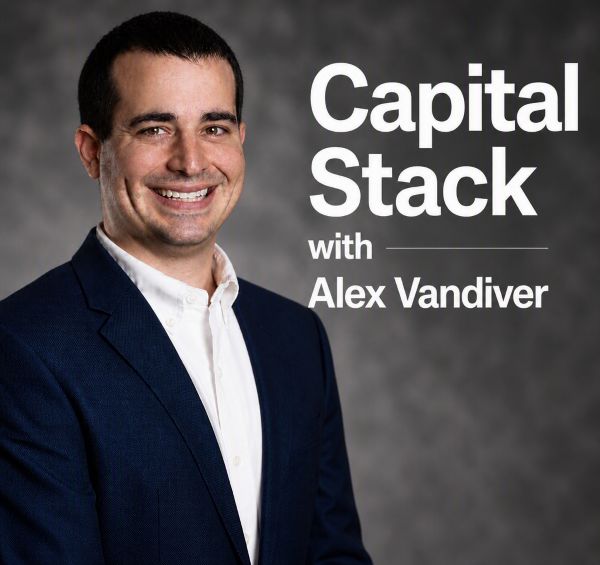
By Alex Vandiver, Associate, Entoro Capital, LLC
Last column I handed the mic to George Yepes, who has spent almost 40 years on the capital side of the table. I closed by asking him the question this whole series has been circling: what's the next scarce input in middle-market real estate? His answer wasn't power, water or dirt. It was people. "There is no shortage of people with projects seeking capital," he said. "There is a much smaller universe with the experience, discipline, relationships and operating capability to deliver."
I've been thinking about that line ever since. For four columns I've chased the things a deal can't close without: credit, power, the finished lot and an intermediary you can trust. All four still matter. But every one of them gets solved, or doesn't, by the person at the center of the deal. The sponsor is the one input you can't refinance, rezone or replace halfway through.
Plenty of projects, not enough sponsors
Most weeks the pipeline looks the same. A master plan with a beautiful rendering. A land deal with a pro forma that clears a 25% IRR. A first-time developer who has the site under contract and needs the equity by next month. There is no shortage of ideas. What's scarce is the person who has taken an idea like that through entitlements, construction, a cost overrun, a rate shock and a lease-up, and still returned investors' money.
That gap is widest in the middle market. A $15 million deal doesn't get the institutional sponsor with a 30-person team. It gets an entrepreneur, a small development shop or a first-time fund. Some of those are excellent. Some are a pitch deck. The IRR on page one looks the same either way. The difference is the sponsor, and that's where the underwriting should start.
Four questions to ask any sponsor
"What have you actually done?" Not what you've been involved in. Completed projects, at a similar size, in a similar product type, with the investor outcomes attached. A track record built entirely in a rising market tells you less than one deal that went sideways and still got worked out. Ask about the one that didn't go to plan. A good sponsor has that story ready and doesn't mind telling it.
"How much of your own money is in?" Sponsor equity is the cheapest alignment there is. A sponsor with real cash in a first-loss position thinks about the downside the way the investor does. A sponsor whose stake is mostly deferred fees, or land contributed at a marked-up value, thinks about the upside. Ask for the number, and ask whether it's cash.
"How do you get paid, and when?" Acquisition fees, development fees, asset management fees, the promote. None of those are wrong on their own. What matters is the order. If the sponsor does well before investors get their capital back, the incentives point the wrong way, no matter how good the deck looks.
"Who runs it after the money comes in?" Raising capital and building a project are two different jobs. Ask who manages construction, who handles investor reporting and who answers the phone when a draw is late. A sponsor who is the whole team is a key-person risk with a logo.
The operator who becomes a developer
Some of the best sponsors I've come across didn't start in real estate. They started running businesses that happen to sit inside buildings: restaurants, retail, hospitality, healthcare. They spent years paying rent, negotiating leases and learning which corners get foot traffic and which don't. At some point they decided to own the building instead.
That background shows up in ways a pro forma can't capture. An operator knows what a tenant can actually afford, because they've been the tenant. They know a mixed-use project lives or dies on the ground floor. They've made payroll through a bad quarter, which is a better stress test than any sensitivity table. And they often bring their own demand, because the first tenant is frequently their own business.
There are trade-offs. Operators can be stretched across too many ventures at once. Some underestimate how different construction risk is from operating risk. Their reporting can be informal, built for a business they own outright rather than for outside investors. None of those are reasons to pass. They're reasons to structure carefully, with clear milestones, real reporting and a capital partner who brings the process the operator may not have built yet.
Houston is full of these sponsors. It's a city without zoning, which means the person who understands the block often matters more than the map. A lot of the most interesting middle-market deals here come from entrepreneurs who built something first and developed second.
What good looks like
Tested. At least one full cycle behind them, and a straight answer about the deal that went wrong.
Invested. Real cash in the deal, sitting behind the investors, not just a deferred fee.
Staffed. A team and a process that will still be there in year three, not just the founder's cell phone.
Transparent. Reporting an outside investor can read without a translator, on a schedule, whether the news is good or bad.
The bottom line
This series has been about scarce inputs. Credit, when the banks stepped back. Power, when the grid couldn't keep up. The finished lot, when nobody wanted to carry the dirt. The intermediary, when investors needed to know who they were really dealing with. George's answer ties all four together. Each of those inputs is only worth something in the hands of a sponsor who can execute. Capital can be raised. Land can be bought. Power can, eventually, be delivered. The sponsor who has done it before is the one input nobody can manufacture on deadline.
Next time, I'll sit down with one: a Houston entrepreneur who built operating businesses first and real estate second, and who has spent the last several years putting that experience to work across the city.
Definitions
Sponsor: the developer or operator who finds, organizes and manages a real estate project and raises capital from investors to fund it.
Track record: a sponsor's history of completed projects and the returns investors actually received on them.
Sponsor equity: cash the sponsor invests in its own deal alongside outside investors, sometimes called a co-invest.
First-loss position: the part of the capital stack that absorbs losses before anyone else does.
Deferred fee: a fee the sponsor earns but agrees to take later, sometimes counted toward its stake in the deal.
Promote: a share of profits above an agreed return, usually paid to the sponsor as a reward for performance.
Key-person risk: the risk that a project depends so heavily on one individual that it struggles if that person is unavailable.
Lease-up: the period after construction when a new property fills with tenants and reaches stabilized occupancy.
Disclaimer: The views and opinions expressed in this article are those of the author and do not necessarily reflect the views of Entoro, LLC, or any of their respective affiliates. This article is provided for general informational and educational purposes only and does not constitute investment advice, a recommendation, an offer to sell, or a solicitation of an offer to buy any security, financial product, or investment strategy. The information presented is believed to be reliable but is not guaranteed as to its accuracy, completeness, or timeliness. Any forward-looking statements or opinions are subject to change without notice.
Author Bio: Alex Vandiver is an Associate at Entoro Capital, focused on business development across real estate, energy, and artificial intelligence. He brings six years of commercial real estate experience and holds an MBA from Rice University’s Jones School of Business, giving him a strong analytical foundation and industry depth in financial analysis, market evaluation, and client-facing strategy.