
Natural Capital & The Energy Transition
Building a Cacao Platform in Panama
By DWN-team · Nov 17, 2026 Views: 1,867
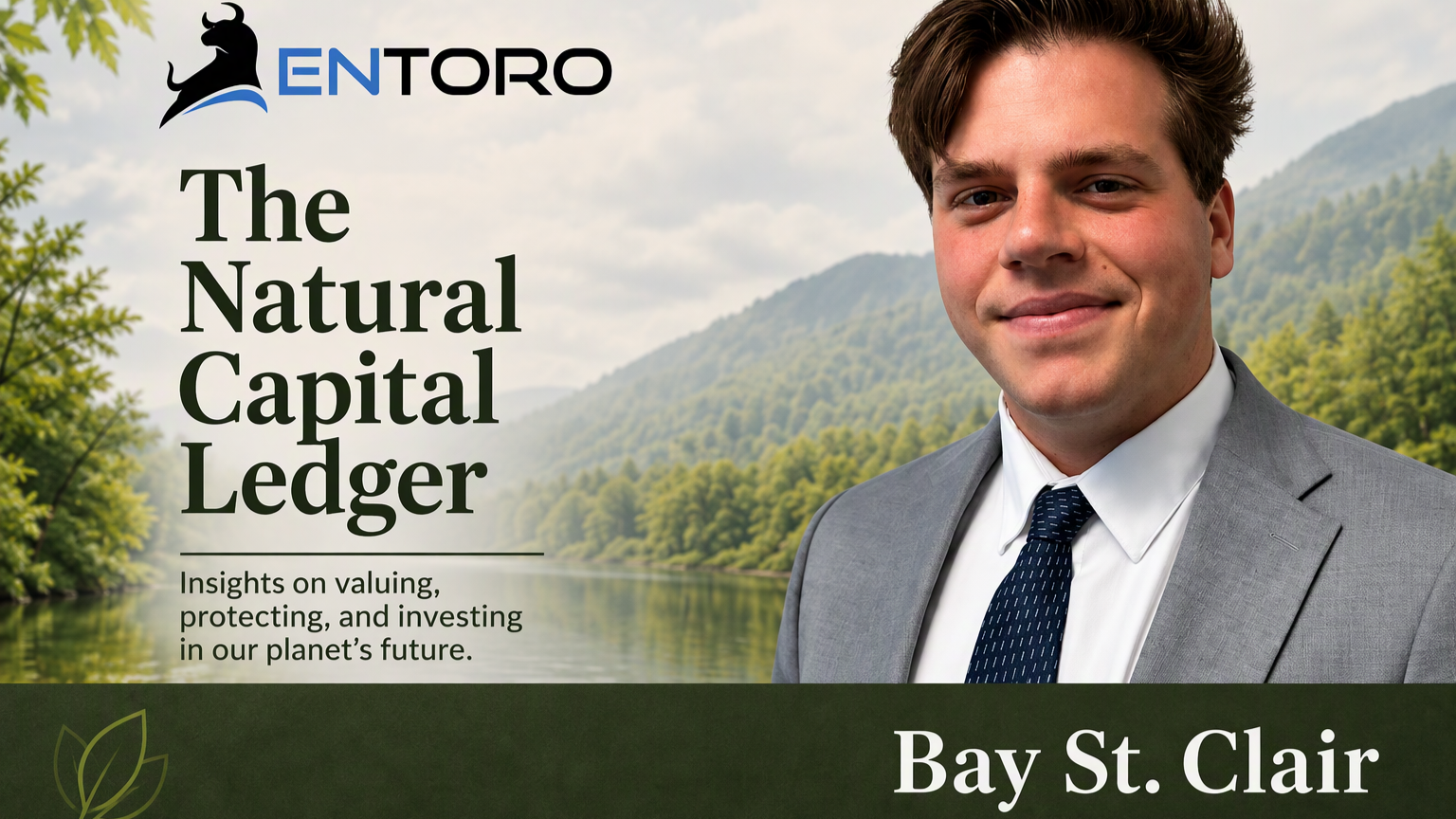
By Bay St. Clair, Associate, Entoro
In Part 1, Constantino Dimitrakis walked through the career that brought him to cacao and why he chose Panama. This time we get into the mechanics of his newest venture and facility.
Our conversation is edited for length and clarity.
How the business works
Bay: Most plantation projects have to wait years for their first meaningful harvest. You're building the processing plant first and running it on beans bought from various Latin American countries. Why start there, and how does that change the business economics while the plantation matures?
Constantino: Because the plantation needs time, and the business shouldn't sit still while the trees grow. By processing beans that we buy from established producers in countries like Ecuador and Nicaragua, we can start selling cocoa liquor or paste, butter and powder much earlier. It builds up our customer relationships and operating team before our own harvest arrives, so when it does, the buyers are already there.
Bay: Walk me through it. A tonne of beans shows up at the plant. What happens between that and a container leaving the port?
Constantino: The beans are sanitized and cleaned to remove stones, dust and metal, then roasted to develop flavor. We crack them and remove the thin outer shells, grind the nibs into liquor, and press that liquor to separate the butter from the cocoa cake. The cake is then milled into powder. Roughly half of each tonne becomes butter and almost half becomes powder, which we pack and ship through either of the two ports or through the Canal.
Bay: Cocoa prices have been all over the place over the last few years. How is fine-aroma cocoa priced differently from the commodity benchmark, and what actually determines whether a producer earns a premium?
Constantino: The commodity price is the floor. A premium comes from genetics, careful fermentation and drying, consistent quality from lot to lot, certifications like Rainforest Alliance and full traceability. Most of all, it comes from relationships with buyers who know what they are getting. You earn that premium.
Customers and markets
Bay: Who actually buys this cocoa, and where does it end up?
Constantino: Processors and brokers who need cocoa butter, powder and paste, chocolate makers and chocolatiers, and food-service distributors. We're in discussions with a buyer group in South Africa, and we are developing white-label chocolate with a co-manufacturer in Ecuador. Our natural markets are Europe and the Middle East, where we already have long-standing relationships.
Bay: You've been working with DMCC in Dubai on its Cacao Center. Tell me about that, and why the Gulf is interesting for Latin American cocoa.
Constantino: I collaborated with DMCC's Executive Chairman and CEO on the concept of their Coffee Centre before it opened in 2019, and it was a great success. We are now working on its Cacao Centre. Dubai is a major trading hub, and the Gulf is a growing market for chocolate and specialty products. Through Katzala, we already know those markets, so connecting Latin American cocoa to them is a natural next step for us. We also have agreements in place to distribute cocoa products and raw beans using DMCC's infrastructure and customer base.
Bay: Latin America already has some excellent fine-aroma producers. Where do you think the supply chain is still fragmented, and what are you trying to do differently?
Constantino: Most fine-aroma cacao comes from smallholders. The quality can be excellent, but genetics, fermentation and records vary from farm to farm, and very little is processed in the country of origin. We are bringing certified genetics, the farm, post-harvest operations and processing under one operator with one set of records, so buyers get fine-aroma quality with consistency and full traceability.
Carbon and environmental value
Bay: You're converting long-used cattle pasture into a permanent cacao system. What does that potentially mean from a carbon and land-restoration standpoint?
Constantino: Cattle pasture captures very little carbon, if any. A permanent cacao system with shade trees captures carbon in the trees and in the soil, year after year. It also brings back biodiversity, protects the soil from erosion and improves the watershed. Our early modeling is encouraging, but nothing is certified yet, and we are keeping carbon cash flows separate from our projections and how we are planning the business model.
Bay: You've been in discussions with Panama's Ministry of Environment and Ministry of Agricultural Development. What have those conversations focused on, and what are they most interested in about the project?
Constantino: Mostly about doing it properly: the environmental permits, the phytosanitary standards for our plant material, and a possible sovereign-authorized carbon pathway under Article 6 of the Paris Agreement. What interests them most is seeing degraded pasture restored, formal rural jobs in Veraguas and a project that can contribute to Panama's climate commitments.
Bay: Panama has put a number of new policies and regulations in place around forest restoration, climate adaptation and environmental projects in recent years. Which of those changes are actually relevant to what you're building, and how do they affect the project in practice?
Constantino: Executive Decree 100 established Panama's national program for low-carbon development, and Decree 142 built on it. Together, they establish a framework for carbon market development and the registration of mitigation activities. Panama has also adopted a sustainable finance taxonomy, and a climate change framework law is in development. In practice, these developments give us clarity, but our business runs on cacao, not on policy.
What could go wrong
Bay: Planting roughly 885,000 trees on a new site is a big job. What keeps you up at night, and what's the plan when something goes wrong?
Constantino: Getting the planting window right and getting every plant to survive its first year. We plant in two blocks rather than all at once. GRUVASA is contracted to do the work, we have multiple phytopathologists and entomologists on site, our trees come from our own nursery, and we are arranging crop and business-interruption insurance. When something goes wrong, we find it early and deal with it fast.
Bay: Cocoa prices have risen dramatically over the last few years. If prices fall materially from today's levels, how does Aegean American still prove to be a fruitful business venture?
Constantino: We never planned around record prices. Our plan prices beans near the five-year average and doesn't count on a fine-aroma premium. Processing earns a spread between beans and finished products, so it depends less on where the cocoa price sits. We also keep costs disciplined. High prices are a bonus for us, not the plan.
Bay: Witches' broom, phytophthora, the dry season. How do you manage those risks, and what has the initial pilot project taught you?
Constantino: Prevention first. We start with disease-tolerant grafted genetics, then add drainage designed for heavy rain to protect against phytophthora, pruning and canopy management to prevent witches' broom, and drip fertigation with reservoirs for the dry season. The farm sits in an enclosed valley with controlled access, so we know who and what comes in. Through our experimental clonal garden and the plantation we recently established in Bocas del Toro, we have learned that prevention is key to our success.
The team and the capital
Bay: You've put together a team spanning agriculture, processing, commodities, and finance. Where are the gaps that you personally can't fill, and what does the broader team bring to the business?
Constantino: I'm an administrator, a trader and an operator, not a plant scientist or a capital markets specialist, although throughout this process I have gained the necessary knowledge to make informed decisions on the technical side of the business. And when I don't know something, I ask the experts. It's that simple.
Adolfo Sen and engineer Eduardo Dominguez oversee SEPLASA. Adolfo also ran commercial operations at Copa Airlines for over two decades.
Our board of advisors bring structured finance experience from Goldman Sachs, agricultural policy experience from Panama's Ministry of Agricultural Development, and international commercial strategy. OneBean, a specialist cacao advisory firm, reviewed our technical design. My job is to keep everyone pulling in the same direction.
Looking ahead
Bay: Ten years from now, where do you see Aegean American and what do you want the company to be known for?
Constantino: I want Aegean American to be the reference for traceable fine-aroma cacao from Panama: a well-run farm, a processing business with loyal buyers, and a model we can repeat with other producers in the region. Most of all, I want it to be known as a company that did what it said it would do, for buyers, for our people in Veraguas and for everyone who backed us.
The bigger picture
What stands out to me about Aegean American is that the opportunity extends well beyond producing cacao. Agriculture has traditionally been viewed through the lens of land, yields, and commodity prices, but increasingly, value is also being created through processing, traceability, market access, and control over the supply chain. The ability to connect those pieces is what can turn an agricultural operation into a scalable business.
There is also a broader lesson here for natural capital investment. Environmental benefits and commercial returns do not have to be competing objectives, nor should one necessarily depend on the other. A business that can stand on its own economics while improving land productivity, supporting local employment, and generating environmental value offers a compelling model for how these investments can be structured. Of course, the challenge is translating that potential into consistent operational and financial performance.
Looking ahead, the more interesting question may not be whether Panama can become another recognized origin for fine-aroma cacao, but whether projects like this can help redefine how agricultural value chains are built and financed. If successful, Aegean American's significance could extend beyond the cocoa it produces, offering a model for bringing long-term capital, commercial infrastructure and environmental stewardship together in markets where all three are needed.
Definitions
Cocoa liquor: ground cocoa nibs in paste form, which is pressed to separate cocoa butter from cocoa cake.
Cocoa butter: the fat pressed from cocoa liquor, used in chocolate and cosmetics.
Cocoa powder: milled cocoa cake left after the butter is pressed out.
Winnowing: cracking roasted beans and removing the shell to leave the nibs.
Free zone: a designated area with tax and customs advantages for manufacturing and re-export.
Fertigation: delivering fertilizer through the irrigation system.
Witches' broom and phytophthora: two common fungal-type diseases of cacao, favored by heat and humidity.
Disclaimer: The views and opinions expressed in this article are those of the author and do not necessarily reflect the views of Entoro, LLC, or any of their respective affiliates. This article is provided for general informational and educational purposes only and does not constitute investment advice, a recommendation, an offer to sell, or a solicitation of an offer to buy any security, financial product, or investment strategy. The information presented is believed to be reliable but is not guaranteed as to its accuracy, completeness, or timeliness. Any forward-looking statements or opinions are subject to change without notice.
Author Bio: Bay St. Clair is an Associate at Entoro Capital, LLC, focused on structured finance, carbon markets, insurance, and renewable energy transactions. He supports financial modeling, due diligence, automation, and valuation work for climate finance and environmental asset securitization projects.He plays a central role in expanding Entoro’s Natural Capital Securities platform and 1NatCap’s transaction infrastructure. He supports the origination, structuring, and execution of carbon and natural capital securitization projects through the development of Entoro’s automated processes for diligence frameworks, risk-assessment processes, and capital-markets systems required to move projects from initial evaluation through financing and commercialization.
Bay has supported Entoro Insurance Services by preparing research and presentation materials for various carbon credit insurance partnership initiatives. He also worked as a student consultant with CarMax, where he developed a financial and marketing strategy to enhance electric vehicle adoption.
He earned a Bachelor of Science in Commerce with concentrations in Finance and Management from the University of Virginia’s McIntire School of Commerce. He holds FINRA Series 3, 7, 24, 27, and 63 licenses and is a licensed Property and Casualty Insurance Agent in Texas.