
The Vérité Brief
Liquidity at Death. Deferral for Decades: Part 3 — How Advisors Should Underwrite the File
By DWN-team · Nov 2, 2026 Views: 50
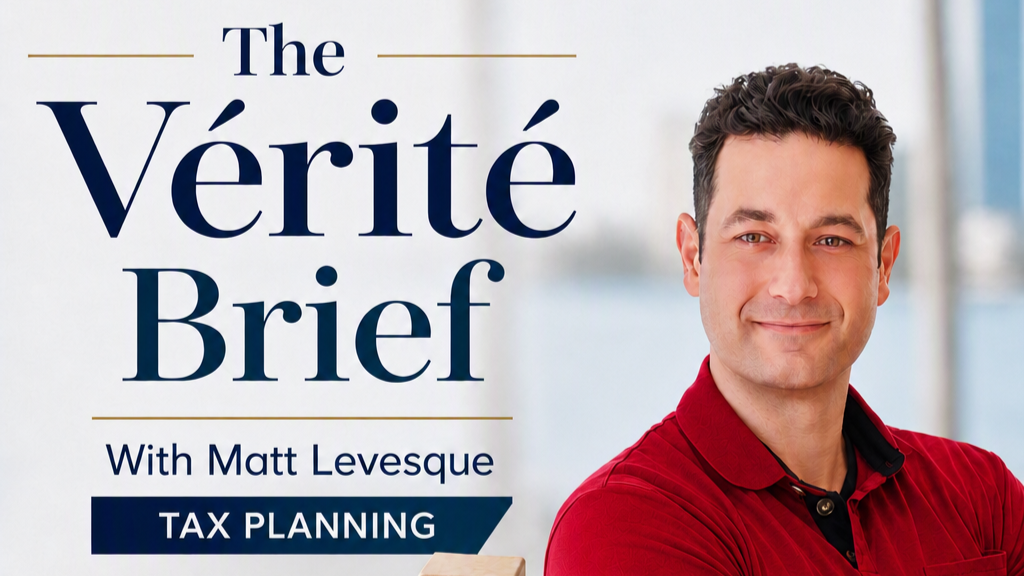
By Matt Levesque, Vérité Planning Solutions
The structure in Parts 1 and 2 is not a product pitch. It is a set of facts that either match a client or do not. The advisor’s job is to decide which, and then to run a process that the CPA, the estate attorney, the trustee, and the carriers can all live with.
Who this is for
- Combined estate already above the available exemption, with real growth still ahead — including early-stage or pre-IPO positions that could create large future tax liabilities.
- Children and a grandchild the parents actually want to provide for — and a willingness to put that provision in an irrevocable document.
- Enough liquidity, or a 1035 / in-kind path, to fund premiums and to seed the annuity without starving the household. Transferable private shares that the carrier will accept in kind are especially relevant.
- A concentrated or high-turnover block of capital that would create annual tax inside a naked non-grantor trust.
- A team. This file does not close with one signature.
Who this is not for
- A couple that needs the assets back. Use a revocable plan, or do not gift.
- A short horizon. A GRAT or a simple annual-exclusion ILIT may be the cleaner tool.
- A family whose only goal is spousal access. A SLAT can be the better first conversation.
- A client who cannot be underwritten, or who will not accept a professional trustee.
- A portfolio that will never be sold and produces no income. The PPVA has less work to do; do not add a wrapper for its own sake.
- Positions that are not transferable or that no carrier will accept in kind after valuation and compliance review.
Split the jobs clearly. Death-benefit need is primary and mid-term access is secondary for the ILIT. Multi-generation compounding and the tax drag inside the non-grantor trust go to the dynasty trust and, if the drag is real (especially on pre-IPO positions), to a PPVA.
Model the ugly cases, not only the illustrated case. For the policy that means lower crediting, loans, and a later death. For the annuity it means gain recognition on the in-kind contribution, diversification forced sales, fees, ordinary-income treatment when value comes out, and possible changes in investor-control or diversification rules.
Informal underwriting and trust drafting can run in parallel. Gifts follow documents. The ILIT buys the policy. The dynasty trust buys the PPVA and, within the carrier’s window, rebalances to the diversification rule. Every year the advisor, the CPA, and the trustee look at exemption used, policy performance, annuity allocation, and whether the children’s and grandchild’s circumstances still match the document.
On the life insurance side the sequence is informal underwriting and medical records, then draft and sign the ILIT, apply in the trust’s name, complete the exam and labs, receive the final offer, gift the first premium, and have the trust pay the carrier. On the dynasty side, identify the assets that belong in the long-term trust (including transferable private interests), obtain independent valuations, draft and sign the dynasty trust, appoint a professional trustee in the chosen state, gift the assets, have the trust apply for and fund the PPVA in kind if the carrier accepts it, rebalance to the diversification rule inside the allowed period, and coordinate the income-tax consequence of the contribution with the CPA.
Crummey notices on premium gifts, the three-year rule if an existing policy is transferred rather than originated in the trust, and state-tax situs are counsel items. Carrier acceptance, valuation, and investor-control documentation are likewise required.
The advisor who already has the relationship does not need to become the insurance agent or the trust lawyer. The advisor frames the estate-tax number, keeps the household cash-flow honest, insists that the two trusts have two different jobs, highlights the tax cost of contributing positions in kind, and runs the annual meeting so the file does not drift. The advisor is the person who brought a complete answer instead of a product sheet.
That is the series. Part 1 is the tax problem after the gift. Part 2 is why the insurance trust and the dynasty annuity are a pair, and which assets belong inside the annuity. Part 3 is the filter. The two case studies that accompany this series tell the same story twice — once for the family, once for the advisor who has to implement it. Readers who would like those case studies should reach out to the Vérité Planning Solutions team.
Disclosure: Educational content only. Not tax, legal, accounting, investment, or insurance advice, and not a recommendation of any product or strategy. Individual results vary. Consult your own qualified advisors before acting. Vérité Planning Solutions and its professionals may receive compensation in connection with insurance or related products. Views are the authors’ and do not necessarily reflect those of Digital Wealth News.
Vérité Planning Solutions publishes The Vérité Brief as educational commentary for advisors and planning professionals. It is not a solicitation and does not replace client-specific legal, tax, or product advice.
© Vérité Planning Solutions. All rights reserved. This article may not be copied, excerpted, or redistributed except as permitted by the publisher or by written consent of the authors.
Author Bio: Matt Levesque is a founding partner at Verité Planning Solutions, leading the design and execution of advanced insurance strategies for high-net-worth clients.
He specializes in structuring insurance solutions within complex financial plans — from funding buy-sell agreements and protecting key-person value to integrating insurance into trust and estate strategies for generational transfer. Matt works closely with tax, legal, and investment professionals to ensure each strategy is coordinated, thoroughly vetted, and built to perform as intended over time. From initial modeling through ongoing review, he remains actively involved to maintain alignment as circumstances evolve.
His background spans the full financial planning continuum. He began in comprehensive wealth management at Wells Fargo Advisors, moved into product distribution roles at Sun Life and Symetra, and later joined Verité Group, LLC as Director of Premium Finance Case Design — experiences he now applies to ultra-high-net-worth planning.
Matt holds a Master’s in Financial Planning from the McCallum Graduate School of Business at Bentley University, as well as a Bachelor’s degree in Finance.
Based in Alton, New Hampshire, he is known for simplifying complex structures and helping clients make informed, confident decisions. Clients rely on Matt not just for answers, but for the right questions — the ones that uncover hidden risks, refine strategy, and align each decision with a defining financial event.