
Capital Stack
A Marathon, Not a Sprint: A Q&A with George Yepes of Entoro Capital
By DWN-team · Oct 27, 2026 Views: 1,266
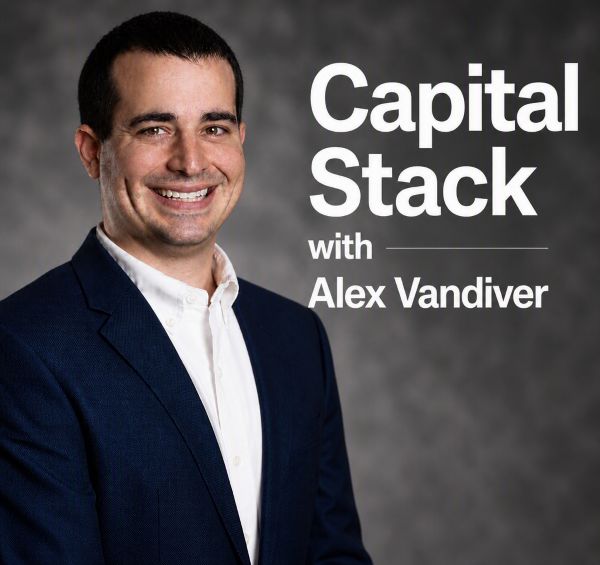
By Alex Vandiver, Associate, Entoro Capital, LLC
For four columns I've been chasing the scarce input in middle-market real estate. First it was credit, and who refinances the middle market now that banks have pulled back. Then power. Then the finished lot. Last time it was the people in the middle, and the question of who actually sits between a sponsor and the capital.
This time I wanted to hear from someone who has done that job for almost 40 years.
George Yepes is Head of Capital Markets and Business Development at Entoro Capital. He started at Instinet and Reuters in the 1980s, when electronic trading was just reaching Wall Street. He spent eight years at Gottex Fund Management, an $18 billion fund of funds, where he helped bring in roughly $5 billion of institutional assets. He went on to Man Investments/FRM, then helped raise more than $800 million at Arel Capital across real estate equity, mezzanine debt and preferred equity. Along the way he took a detour into 3D-printed buildings.
Full disclosure, since that was the whole point of my last column: George and I work together at Entoro. I sent him my questions and his answers are below, edited for length.
How institutions decide
Alex: You started at Instinet and Reuters in the 1980s, selling to trading desks. What did that teach you about how institutions actually make decisions?
George: Institutions don't make decisions simply because you have a great product or a compelling investment opportunity. They make decisions based on trust, relationships, risk management and their own internal processes. You need to understand who the decision-makers are, what motivates them and, perhaps more importantly, what could prevent them from saying yes.
I also learned the importance of listening and letting the trade come to me. Too many salespeople spend their time telling clients what they should buy rather than understanding what those clients actually need.
Whether you're selling an electronic trading platform, a hedge fund strategy or a $100 million real estate investment, the principles haven't changed. Understand your client, solve a problem, build credibility and deliver on your promises.
Alex: You spent eight years raising capital at Gottex. What does an allocator need to see before a first meeting goes anywhere?
George: First, they need to understand the strategy and why it deserves a place in their portfolio. Second, they need confidence in the management team, its track record and its ability to execute consistently.
But there is a third element that is often overlooked: institutional investors need to understand the downside before they become interested in the upside. How do you protect capital, manage liquidity, address conflicts of interest and perform when conditions deteriorate? At Gottex, we lost sleep not worrying about making money, but worrying about not losing our investors' money.
The first meeting is rarely about closing an investment. It's about earning the right to have a second meeting. Institutional capital raising is a process, not an event.
Alex: You moved from hedge fund allocation into real estate with Arel. What carried over, and what did you have to unlearn?
George: What carried over was the importance of manager selection (in real estate, it's site selection), due diligence, investor communication and portfolio construction. What changed was the underlying investment. In hedge funds you're evaluating trading strategies, volatility, correlations and manager behavior. In real estate you're dealing with physical assets, local markets, construction costs, financing structures, tenants and operating execution. And you cannot simply reduce a position because the market changes.
At Arel we raised more than $800 million across real estate equity, mezzanine debt and preferred equity. That reinforced my belief that the capital structure can be just as important as the quality of the asset.
What I had to unlearn was the idea that performance can always be judged through standardized metrics. In real estate, every asset has its own story, and understanding that story means getting into the details.
Credit, power, the finished lot and the middle
Alex: My first column asked who refinances the middle market. From your seat, who is actually writing checks on $5 million to $50 million deals, and who is just talking about it?
George: There is no shortage of capital being discussed, but there is a significant difference between having capital available and having the willingness and authority to deploy it. The most credible sources in that range are well-capitalized private credit funds, debt funds, specialty finance companies and family offices with a clear mandate.
Private credit can be more flexible, but that flexibility comes at a price. Their capital is not cheap. Family offices can be especially attractive because they often have fewer layers of approval and can move quickly when an opportunity fits.
I always want to know three things. Does the investor have discretionary capital? Have they recently completed comparable transactions? And who actually makes the final decision? If those can't be answered, there's a good chance you're dealing with someone who is talking about deploying capital rather than deploying it.
Alex: My data center column got more attention than anything else I've written. Are investors chasing powered land, or does it already feel crowded?
George: Investors need to distinguish between a compelling industry theme and an attractive individual investment. Having land near electrical infrastructure does not make a property a viable data center site. The real questions are whether the power is contractually available, when it can be delivered, what it will cost and whether the location supports a financially viable project.
We're seeing a lot of developers market sites based on anticipated power rather than firm commitments. That creates a meaningful gap between perceived value and realizable value.
The market is becoming more selective. The opportunity is still significant, but the easy money in simply identifying potential sites may be disappearing. The next phase will reward developers who can deliver power, infrastructure, tenants and credible financing, not simply a good presentation.
Alex: Phase one is the hardest money to raise in a master-planned community. What would make an investor comfortable funding the horizontal phase?
George: You're asking investors to fund roads, utilities, drainage and site work before the project produces meaningful cash flow. To make that work, the developer needs a credible path to monetization supported by realistic absorption. The land basis has to be low enough to provide real downside protection. I want a defined construction budget, reliable contractors, appropriate contingencies and a realistic timeline. And the structure has to align sponsor and investor, which generally means meaningful sponsor equity, defined milestones and investor protections.
I would also look for ways to phase the investment rather than committing all the capital upfront, releasing capital as infrastructure milestones are hit or as presales show demand.
The best way to raise money for horizontal development is to show you're not simply financing construction. You're financing a clear path to creating and realizing land value.
Alex: Last column I wrote about who sits between. When intermediaries bring deals to investors, what do they most often get wrong?
George: The biggest mistake is assuming that access to an investor is the same thing as understanding an investor. Investors have specific mandates, preferences and internal constraints. They also move through cycles of due diligence, investment committee debate and allocation. It's critical to know where in that cycle you're entering, and to be patient during discovery.
Too many intermediaries distribute opportunities broadly without doing the work to see whether the deal fits the audience. They underestimate preparation. An investor should not spend the first meeting trying to understand the capital requirement, ownership structure, use of proceeds, projected returns or exit. And they oversell the upside while minimizing the risks.
A good intermediary should act as a filter, not a distributor of opportunities. Your reputation is built as much on the deals you choose not to introduce as on the ones you finance.
Alex: How did fund-of-funds due diligence shape the way you vet sponsors today?
George: It taught me that evaluating the manager is often as important as evaluating the strategy. I want to understand the people behind the opportunity. Have they executed similar transactions? How did they perform when things went wrong? Are their assumptions realistic? Do they have the infrastructure to manage the investment after the capital is raised?
I also pay close attention to alignment. How much capital does the sponsor have at risk? How are fees structured? Does the sponsor benefit disproportionately before investors receive an appropriate return?
A compelling projected IRR is not enough.
This cycle, and what comes next
Alex: You've raised capital through the dot-com bust, 2008, COVID and now higher rates. What's actually different about this cycle?
George: The dot-com bust showed how quickly speculative valuations collapse when confidence disappears. In 2008 the problem was the financial system itself: excessive leverage, weak underwriting and interconnected institutions. COVID interrupted economic activity almost overnight.
Today is different because the cost of capital has fundamentally changed from the low-rate conditions of the previous decade. For years, many strategies benefited from cheap financing and rising valuations. Now sponsors have to show their investments work without aggressive leverage, falling rates or optimistic exit values.
There is still substantial private capital looking for opportunities. The challenge is matching it with transactions that meet more disciplined underwriting. This market rewards experience, patience and creativity in structuring. And capital preservation should never go out of style.
Alex: How do family offices behave differently from institutions on a real estate deal?
George: Institutions operate within formal mandates, allocation targets, investment committees and established diligence, which often means multiple layers of approval. Family offices can be much more entrepreneurial. They may look outside traditional categories when they understand the sponsor or see a way to build long-term family wealth, and they can be flexible on structure, from direct equity and preferred equity to credit, joint ventures and co-investments.
But family offices are not a homogeneous group. Some operate with institutional discipline. Others reflect the preferences of a principal or a small team. What they share is the enormous value they place on trust. You may have an excellent opportunity, but if the family isn't comfortable with the people involved, the deal probably won't happen.
Alex: What's the biggest mistake a sponsor makes in a first meeting with capital?
George: Talking too much about how much money they're going to make and not enough about how they're going to protect the investor's money.
Sophisticated investors want the downside. What happens if the project takes another year? What if construction costs rise 15%? What if rates stay elevated? What if the exit doesn't materialize?
Know your audience, be transparent about risks and don't confuse enthusiasm with credibility. The best presentations are not the most polished. They're the ones where the sponsor shows complete command of the investment and its challenges.
Alex: I've spent four columns on scarce inputs. What's the next one in middle-market real estate?
George: Executable capital combined with access to infrastructure. A good piece of land or a promising concept is no longer enough. Developers need reliable power, water, utilities, construction labor and the capital to carry a project through development. In some sectors, particularly data centers and large residential communities, infrastructure may matter more to value than the land itself.
I would add one more: experienced sponsors who can execute. There is no shortage of people with projects seeking capital. There is a much smaller universe with the experience, discipline, relationships and operating capability to deliver. That combination will increasingly separate successful developments from speculative ones.
Alex: You've worked with investors in Japan, Europe and South America. What did that teach you?
George: Early in my career I worked extensively with large Japanese investment banks, and then I was based in London, managing sales across the United Kingdom and Ireland. Later, at Gottex and Man Investments/FRM, I worked with institutional investors across North and South America. Being fluent in Spanish has been valuable across Latin America.
The biggest lesson is that capital markets may be global, but relationships and investment decisions remain deeply local. What works in New York doesn't necessarily work in London, Santiago or Tokyo. In some markets, investors want to get directly into the numbers. In others, establishing a personal relationship and showing long-term commitment is an essential part of the process.
My experience working abroad had unintended benefits in my career as I started working with several Native American tribes. These communities are just as varied and diverse as the communities I worked with in Europe, Japan and South America.
Regardless of geography, the fundamentals stay remarkably consistent: credibility, transparency, preparation and follow-through. International business development requires patience, cultural awareness and a willingness to invest in relationships long before there is a specific transaction on the table.
Alex: What would you tell someone early in their career in capital markets?
George: Invest in relationships. The industry is much smaller than people think, and some of my most important relationships today began 20 or 30 years ago. Become a student of the markets, including the motivations of the investors you're dealing with. Learn how to listen. The best business development people aren't the most aggressive salespeople; they ask intelligent questions and consistently deliver value.
Protect your reputation. You can recover from a lost transaction, but rebuilding trust is much more difficult. And be adaptable and keep your sense of humor. The products and technologies will keep changing. The importance of relationships, integrity, hard work and sound judgment never will.
The bottom line
Most of George's answers came back to the same place. The allocator wants the downside first. The family office wants to trust the people. The intermediary earns its keep by what it doesn't send. Even the next scarce input, in George's view, comes down to sponsors who can actually execute.
When I asked George what ties his career together, he didn't point to a deal. He pointed to relationships, and to how many people treat them as too short-term. Forty years, four cycles, and the job hasn't changed. It's a marathon, not a sprint.
Definitions
Fund of funds: an investment fund that invests in other funds, such as hedge funds, rather than directly in securities or assets.
Allocator: an institution or manager that decides how a pool of capital is divided among strategies, funds or deals, such as a pension fund, endowment or consultant.
Discretionary capital: money an investor can commit without seeking further approval from clients or an outside committee.
Private credit: loans made by non-bank lenders, such as debt funds, usually at higher rates and with more flexible terms than bank financing.
Mezzanine debt: financing that sits between senior debt and equity in the capital stack, carrying higher risk and a higher return than the senior loan.
Preferred equity: an equity position that is paid before common equity but after debt, often with a fixed or priority return.
Horizontal development: the site work that comes before vertical construction: roads, utilities, drainage and grading that turn raw land into finished lots.
Absorption: the pace at which a market takes up new lots, homes or space, usually measured in units sold or leased per month.
Family office: a private firm that manages the investments and wealth of a single family or a small group of families.
Disclaimer: The views and opinions expressed in this article are those of the author and do not necessarily reflect the views of Entoro, LLC, or any of their respective affiliates. This article is provided for general informational and educational purposes only and does not constitute investment advice, a recommendation, an offer to sell, or a solicitation of an offer to buy any security, financial product, or investment strategy. The information presented is believed to be reliable but is not guaranteed as to its accuracy, completeness, or timeliness. Any forward-looking statements or opinions are subject to change without notice.
Author Bio: Alex Vandiver is an Associate at Entoro Capital, focused on business development across real estate, energy, and artificial intelligence. He brings six years of commercial real estate experience and holds an MBA from Rice University’s Jones School of Business, giving him a strong analytical foundation and industry depth in financial analysis, market evaluation, and client-facing strategy.