
Industry Briefs
The Sound of the Exit: Four Trusts at a Discount
By DWN-team · Nov 17, 2026 Views: 119
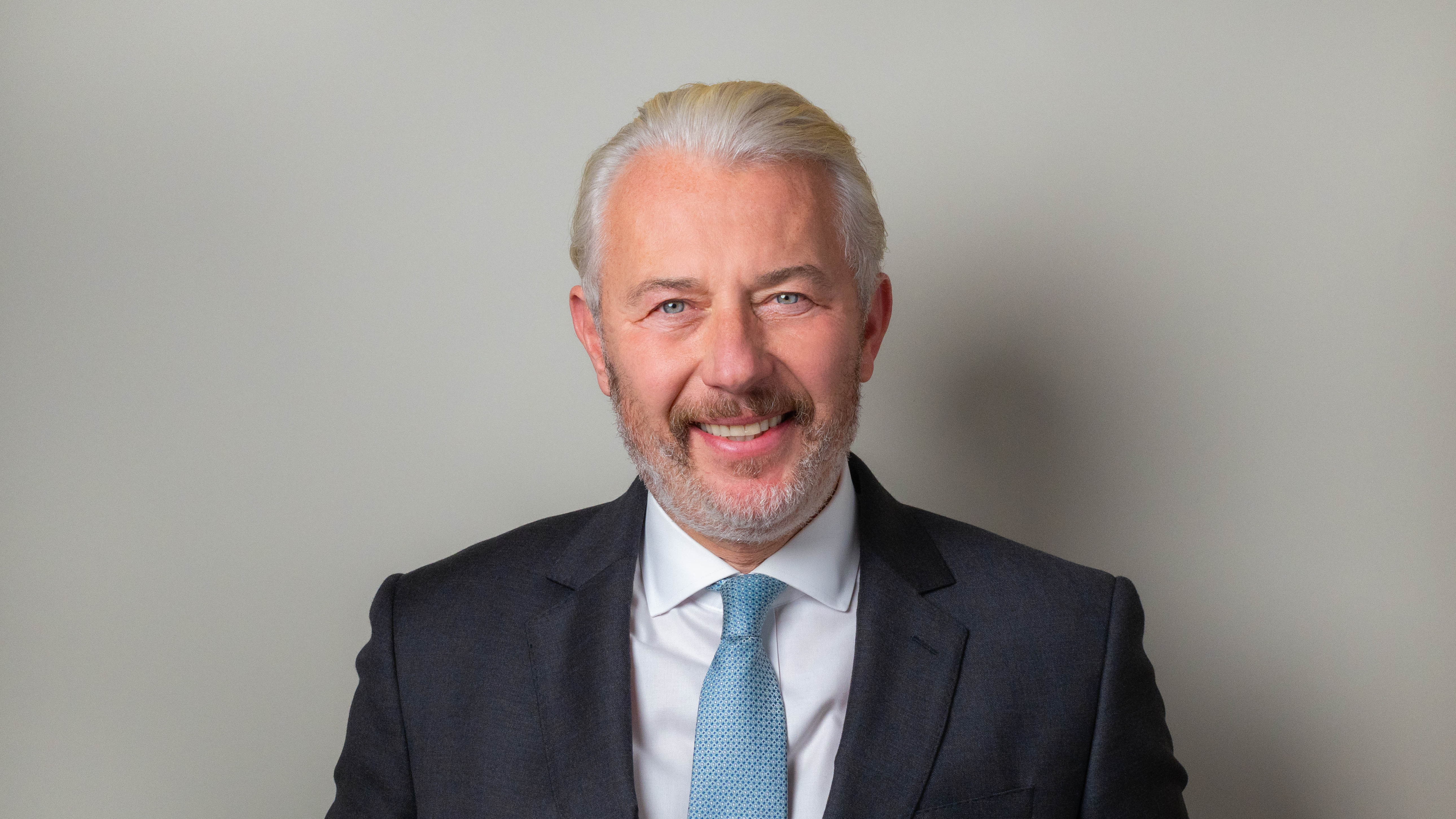
By Nick Lawson, Executive Chair and Founder, Ocean Wall Ltd
Markets in a hurry make poor judges of value. When investors need cash, they sell what they can, not what they should, and nowhere does that do more damage than in investment trusts.
A trust gets hit twice. First, its holdings fall. Then its own shareholders, needing liquidity or simply wanting out, sell the wrapper, and the discount to net asset value (NAV) widens on top. A trust is a closed pool of capital. Its manager never has to sell a single holding to meet redemptions, so every pound of panic lands on the share price alone. This is the distressed seller of a non-distressed asset in its purest form.
The upshot is that I can now buy assets at two removes from fair value: the underlying marked down by a market in a rush, and the trust marked down again against that underlying. When sentiment turns, the arithmetic runs in reverse. You collect once as NAV recovers and again as the discount closes.
Four stand out. Pershing Square Holdings sits 33.6% below NAV, a book of world-class compounders priced like distressed credit. Geiger Counter has the narrowest discount, at 7.2%, but owns the uranium developers where the selling has bitten hardest. SEED Innovations trades 63.6% below its last published NAV, with a robotics portfolio thrown in for nothing. And Yellow Cake prices physical uranium at $72/lb in a $97 world.
Ackman at 66p in the pound
Pershing Square Holdings (LSE: PSH) trades at £39.12 against a 31 October NAV of £58.89. That is 66p in the pound for one of the finest portfolios in public markets.
Nine people run 14 positions, among them Visa, Mastercard, Meta, Amazon, Microsoft, Netflix, Brookfield, Uber, Alcon, Howard Hughes, and Fannie Mae and Freddie Mac. The book sits on about 20 times earnings, yet most of these names trade below their own historical multiples while their prospects have never looked better. Pershing followed Alcon from its 2019 spin-off, when it traded in the high 20s, and finally bought at 17 times.
The market is ignoring the cloud. Amazon has guided that its cloud business could grow at 40% or more a year for several years. Microsoft says Azure could grow above 50% next quarter. Both stocks fell on the news. Analysts have modeled the capex as certain and the returns as a guess. Pershing's Ryan Israel puts it simply: either the spending earns its keep and revenues accelerate, or the budgets get cut.
Fannie and Freddie are the free option. Pershing owns about 10% of each, more than 200 million shares combined. Ackman expects release from conservatorship in 2027 or 2028, before the president leaves office, and puts the prize at half a trillion dollars. With the midterms likely to tie the president's hands, this is one of the few big wins he can still deliver alone.
Howard Hughes, 47% owned across Pershing's funds, is being rebuilt as an insurance holding company. Its real estate stakes will be sold down to pension funds and family offices for fees, and the capital moved into Vantage at a targeted return on equity of 20% or more. Israel puts NAV in the low 100s against a share price below $80.
Behind it all, the manager's fee-paying assets reached $24bn, up $1bn in a month on performance alone, and 96% to 98% of that capital is permanent. There is no fundraising treadmill and no forced selling. A third off a book this good is hard to justify.
The developers who will fill the gap
The world is short of uranium, and the shortage is getting worse. Geiger Counter (LSE: GCL) owns the companies that will fill the Western gap, and today you can buy them at 41p against a NAV of 44.18p.
Mines have produced less than reactors burn every year since 2018. Stockpiles and recycled material plugged the hole, and both are running dry. Mike Alkin of Sachem Cove told the NEI seminar in Houston that inventories have been drawn down by about 210 million lb more than expected since 2017.
Costs are climbing at the cheapest producers. Cameco's cash costs rose 22% in the third quarter, Kazatomprom's 25% in the first half. If the low cost end is paying more, new mines will need a far higher price before anyone builds them. Kazakhstan, the largest producer, is weighing a reserve big enough to fuel its own reactors for 100 years. Governments are funding reactors, not mines, and a reactor without fuel is a stranded asset.
The next Western pounds will come from NexGen, Paladin and Denison, producing into the late 2030s and 2040, when utilities still have 3.1 billion lb uncovered. Geiger holds NexGen at 23.7% of the portfolio, Paladin at 16.9% and Denison at 6.5%. Cameco, the top holding in most uranium ETFs, is just 7.4%. Around 64% of the book sits in North America, where utilities will pay most for secure supply.
Term uranium is $97/lb, a nominal record, and equities haven't followed. The board has confirmed Manulife CQS as manager after a seven-month review, with Diana Racanelli as permanent lead, which removes the overhang. I expect the gap between commodities and developers to close, and Geiger is the cleanest way to own that view.
Robotics for nothing
SEED Innovations (AIM: SEED) trades at 2.15p against a last published NAV of 5.90p at 31 March 2026, a 63.6% discount to its NAV before the recent raise. Of £11.0m in NAV, £2.7m, or 24%, was cash and receivables.
The company is changing what it owns. The legacy book of life sciences, wellness and medical cannabis is concentrated in Avextra (29%), Juvenescence (22%) and Clean Food Group (16%). SEED will sell these over the medium term and recycle the proceeds into physical AI and robotics. Jim Mellon became chair in late 2025 to lead the shift, with Hoid.ai advising.
Robotics is the next phase of the AI cycle. Generative software moved fast and commoditised faster. Machines that sense and act in the real world carry engineering, maintenance and deployment costs that software never did, and those costs are precisely what make them hard to copy. Demand is structural: labour shortages and rising wages leave operators no other way to hold output.
Three investments are done. Feather Robotics, a $1m SAFE at a $60m cap, builds modular humanoids for industrial sites and has since raised a $7.6m pre-seed round led by Gradient Ventures. Fieldwork Robotics, £300,000 for 3.66%, picks soft fruit and is moving to scaled deployment. Cosmic Robotics, a $350,000 SAFE, installs utility-scale solar panels autonomously, is working on live US sites and sits in Y Combinator's Summer 2026 batch.
Every legacy sale turns a private mark into cash for new robotics deals, and SEED already has about £3m to deploy. With a market cap of roughly £6.6m, a doubling in Feather's valuation alone would add more than 10% to it.
Mellon and the board bought at 2.4p. You can buy below them today. The legacy book comes at a deep haircut, and the robotics portfolio comes free.
Uranium at $72 in a $97 world
Yellow Cake (AIM: YCA) trades at 533.3p against a NAV of 679p, a 21.4% discount. At that price, the shares imply uranium at $72.42/lb. Spot is $92.15. Term is $97. Mark the inventory at the term price, and the discount widens to 25.3%.
This is the purest way to own the uranium deficit. There is no mine to build, no cost inflation, no permitting delay, and no Kazakh export question. Yellow Cake simply holds pounds in storage, and you can buy them today for a fifth less than a utility would pay on the spot market and a quarter less than it signs for on term.
The case for the commodity is the one I make for Geiger. Mines have fallen short of reactor demand every year since 2018. Inventories are depleted, recycling adds only about 8 million lb a year, and the cheapest producers on earth are seeing costs rise by more than 20%. Kazakhstan's mooted domestic reserve would hold back pounds from Western buyers. Utilities still have 3.1 billion lb uncovered through the late 2030s and 2040, just as the shortage bites hardest.
The anomaly is striking. Geiger, which owns the developers and carries all their execution risk, trades at a 7.2% discount. Yellow Cake, which owns the finished product, trades at three times that. The market is charging less for the risky route than for the certain one.
With a market cap of about $1.8bn, Yellow Cake is liquid enough for institutions and simple enough for anyone. If term prices hold, the discount should close. If they rise, holders get both.
Listen to the exit
Forced sellers do not read balance sheets. They read margin calls, redemption notices and their own nerves. That is why a trust discount so often tells you about the holder rather than the holding.
Pershing at two-thirds of NAV, Geiger at a modest discount on the most battered corner of the uranium market, SEED below its own chair's purchase price, and Yellow Cake selling pounds for well under what utilities pay: none of these discounts says anything about the assets. They are the sound of the exit. I would rather be the one buying when the doors swing open.
Author Bio: Nick Lawson is a financier and entrepreneur with over 30 years at the sharp end of global equity markets. At Deutsche Bank in London, he rose to Managing Director, building the No.1 rated Special Situations and Merger Arbitrage desk before becoming Global Head of Macro and Synthetic Equity, overseeing complex strategies across international markets.
In 2015, he joined Arrowgrass Capital Partners LLP as Partner and Head of Strategic Capital Solutions, forging deep relationships with the world’s leading asset allocators and securing access to some of the most compelling investment opportunities available.
Nick founded Ocean Wall in 2019, backed by four cornerstone investors, to apply a career’s worth of hard-won expertise to under-appreciated markets where sophisticated analysis still generates genuine alpha. The firm has established itself as a distinctive voice in nuclear fuel, uranium, and critical materials; sectors where depth of knowledge and independence of thought remain decisive advantages. In 2026, the firm extended its reach to North America with the founding of Ocean Wall Corp, bringing the same conviction-led approach to the United States market.
He is Chair of Chorus Intelligence, a leading data analytics business supporting law enforcement and counter-terrorism, and served as interim Chair of Deutsche Bank Investment Partners ahead of its 2025 spin-out to form DB Investment Partners, where he remains a Senior Adviser.
Beyond finance, his commitments reflect both breadth and conviction. He founded and chairs the Angus Lawson Memorial Trust, a UK charity established in 2006 that has backed over 320 projects worldwide. He is an Ambassador for the Harrow School Development Trust, a school governor at Thorney Close Primary School in Sunderland, and sits on the Advancement Board of the University of Exeter, supporting its ambitious £150m philanthropic campaign.